
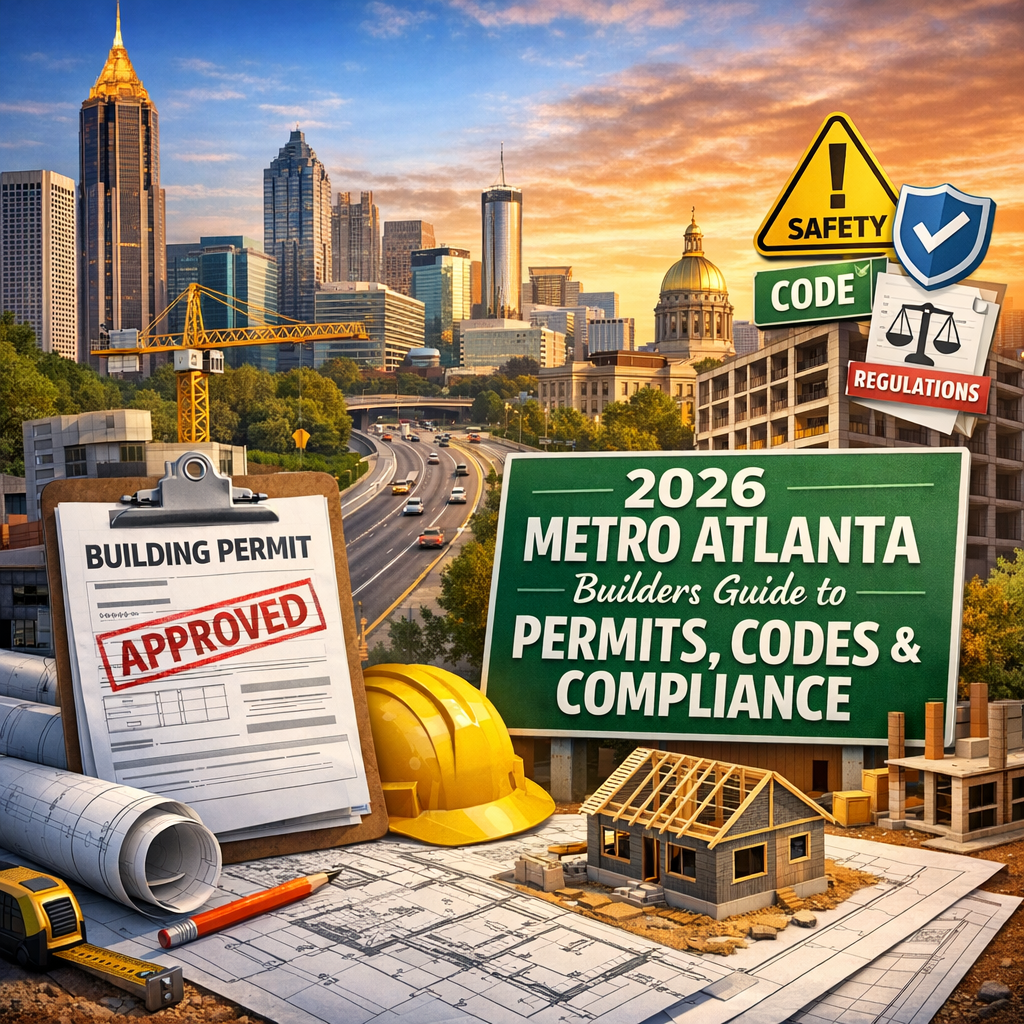
2026 Metro Atlanta Builders Guide to Permits, Codes & Compliance
Permits, Codes, and Compliance: A 2026 Guide for Metro Atlanta Builders
As the Metro Atlanta area continues to grow, builders and developers face an evolving landscape of regulations and requirements. Understanding permits, building codes, and compliance is crucial for any construction project to proceed smoothly and legally. In 2026, Metro Atlanta builders and developers must navigate several layers of jurisdictional regulations to ensure their projects meet local, state, and federal standards. This guide provides an essential overview of what you need to know.
Understanding Building Permits in Metro Atlanta
Before digging into the details of building codes and compliance, it’s essential to understand the role of permits in the construction process.
Why Are Building Permits Important?
Building permits are legal authorizations issued by local governments to ensure that a project complies with existing standards for safety, zoning, and land use. They are crucial for:
- Ensuring Safety: Permits allow local governments to protect the public by ensuring that buildings comply with safety standards and codes.
- Protecting Your Investment: Compliance with building codes preserves the value of your investment and minimizes the risk of costly penalties and redoing work.
- Avoiding Legal Issues: Obtaining the necessary permits helps avoid legal pitfalls linked to non-compliance with local zoning laws and building codes.
How to Obtain a Building Permit in Metro Atlanta
- Pre-application Meeting: Start with a pre-application meeting with local zoning and planning departments. This step can clarify what specific documentation and plans you need to prepare.
- Submission of Plans: Submit detailed project plans, usually including site plans, architectural drawings, and engineering details.
- Review Process: Your submission will undergo a review for compliance with building codes and zoning ordinances. This may take several weeks.
- Addressing Feedback: Address any issues raised during the review and amend your plans accordingly.
- Issuance of Permit: Once all criteria are met, the building permit is issued.
Navigating Building Codes and Standards
Building codes in Metro Atlanta can be quite complex, encompassing various aspects such as structural integrity, fire safety, electrical systems, and accessibility. These codes are updated regularly to incorporate the latest safety protocols and technology advancements.
Key Codes to Consider
- International Building Code (IBC): Provides standards for commercial building safety.
- International Residential Code (IRC): Covers all single-family homes, duplexes, and townhouses.
- National Electrical Code (NEC): Standards for safe electrical design, installation, and inspection.
Staying updated with these codes is vital, as non-compliance can lead to significant delays and increased costs. Regular training and consultations with experts in code compliance are highly recommended.
Compliance: More Than Just Following Rules
Compliance isn’t just about adhering to technical specifications; it’s about integrating best practices into your building processes.
Strategies for Ensuring Compliance
- Regular Training: Keep your team informed and updated on the latest building regulations and best practices.
- Consultation with Experts: Engage with professionals who specialize in code compliance to review your project plans.
- Quality Assurance Controls: Implement internal checks and balances to ensure every phase of the building process meets compliance standards.
Conclusion: Building a Robust Foundation for Your Projects
For builders in Metro Atlanta, understanding and adhering to the evolving landscape of permits, codes, and compliance is not just about following the law — it’s about setting a foundation for successful, sustainable development. As we look towards 2026 and beyond, staying proactive in understanding and implementing these guidelines will ensure that your projects are not only compliant but also competitive in a bustling real estate market. Embrace the complexity with a strategic approach, and your building projects will stand strong for years to come.