

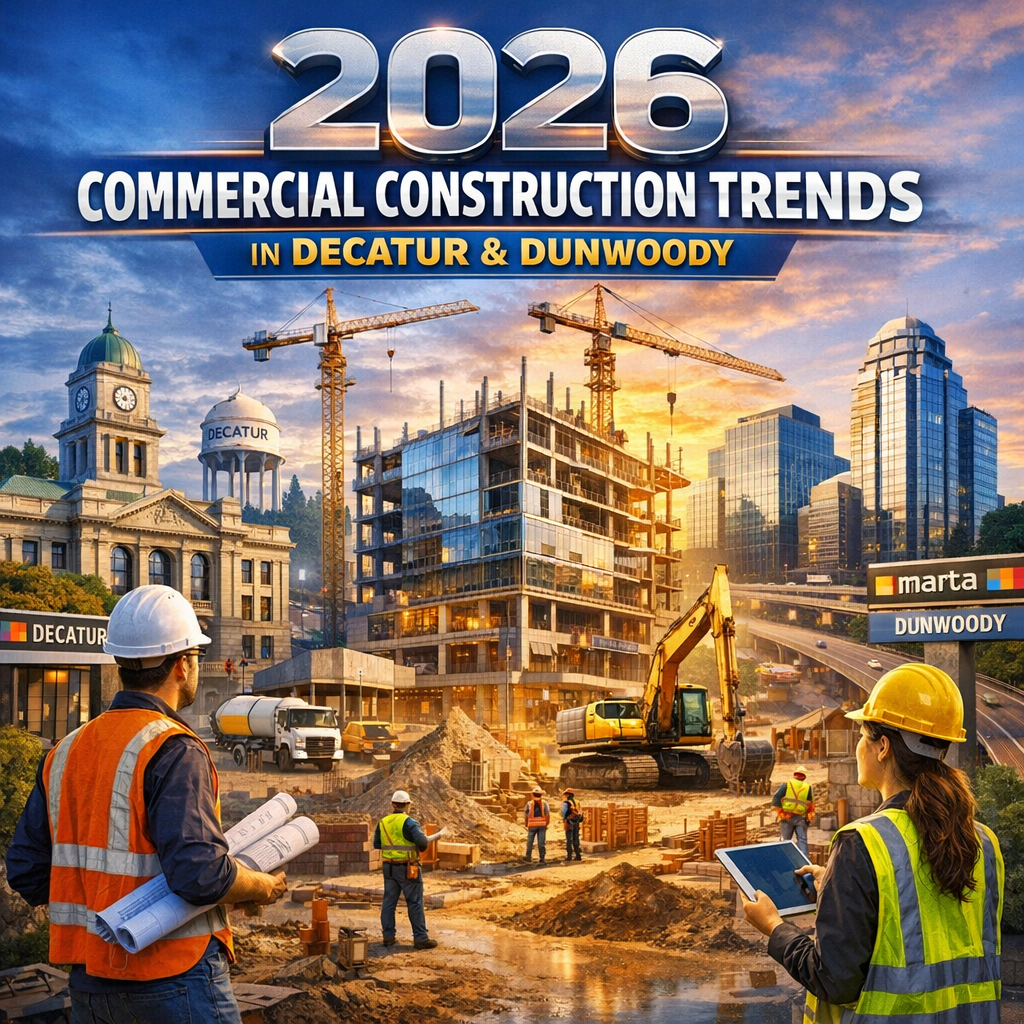
2026 Commercial Construction Trends in Decatur and Dunwoody
Commercial Construction in Decatur and Dunwoody: What Businesses Should Expect in 2026
The landscape of commercial construction in the bustling suburban hubs of Decatur and Dunwoody is set for significant change by 2026. As businesses look to either start up or expand in these areas, understanding the evolving dynamics of construction can provide a competitive edge. This post explores what businesses should expect regarding commercial construction trends, costs, and regulations in Decatur and Dunwoody in the upcoming years.
1. Emerging Trends in Commercial Construction
Sustainability and Green Building
In response to growing environmental concerns and consumer preferences, both Decatur and Dunwoody are seeing a surge in green construction practices. By 2026, businesses can anticipate stricter sustainability requirements, with local governments possibly offering incentives for energy-efficient buildings.
Technological Integration
Technological advancements will continue shaping commercial construction, emphasizing smart buildings equipped with IoT (Internet of Things) technologies for better energy management, security, and operational efficiency. Wireless systems and AI-driven solutions are expected to become standard features in new commercial structures.

Mixed-Use Developments
The popularity of mixed-use developments is on the rise, where residential, commercial, and sometimes industrial components are combined within a single project. This trend is particularly strong in community-centric locales like Decatur and Dunwoody, promoting a streamlined lifestyle for residents and workers alike.
2. Cost Dynamics
Material Costs
Material costs have been fluctuating due to global economic conditions and supply chain issues. By 2026, businesses considering construction projects in these cities should prepare for variable costs, particularly in steel, concrete, and sustainable materials, which may be priced at a premium due to increased demand.
Labor Availability and Costs
With the construction industry facing a nationwide labor shortage, both Decatur and Dunwoody are experiencing similar challenges. Skilled labor may become costlier, affecting overall project budgets. Partnering with local vocational schools or apprenticeship programs may become a strategic move for many businesses to secure necessary talent.
3. Local Regulations and Permits
Building Codes and Compliance
Decatur and Dunwoody have been updating their building codes to accommodate modern construction demands and safety protocols. Businesses should stay updated with any changes to ensure compliance and smooth project progression. This includes specifics around zonings, such as height restrictions or density allowances.
Permit Processes
While traditionally seen as a hurdle, both cities are working towards streamlining their permit processes. However, businesses should still allocate sufficient time for permit approvals, especially for complex projects or those involving significant environmental impacts.
4. Commercial Construction Service Providers
Choosing the right construction firm is crucial. Businesses should look for providers with:
- A solid track record in commercial projects.
- Experience in sustainable design and construction practices.
- Good standing with local construction and business bureaus.
5. Future Outlook and Opportunities
Looking ahead, the commercial construction sector in Decatur and Dunwoody presents numerous opportunities for growth and innovation. Businesses can benefit from early planning and engagement with local communities to align their construction projects with broader economic and environmental goals.
Conclusion
As we approach 2026, commercial construction in Decatur and Dunwoody is gearing up for an exciting phase of growth and transformation. Businesses planning to develop or expand in these areas should keep abreast of the latest trends, cost factors, and regulatory changes to fully capitalize on what these vibrant communities have to offer. With the right approach and preparation, businesses can turn these changes into substantial opportunities for success.