
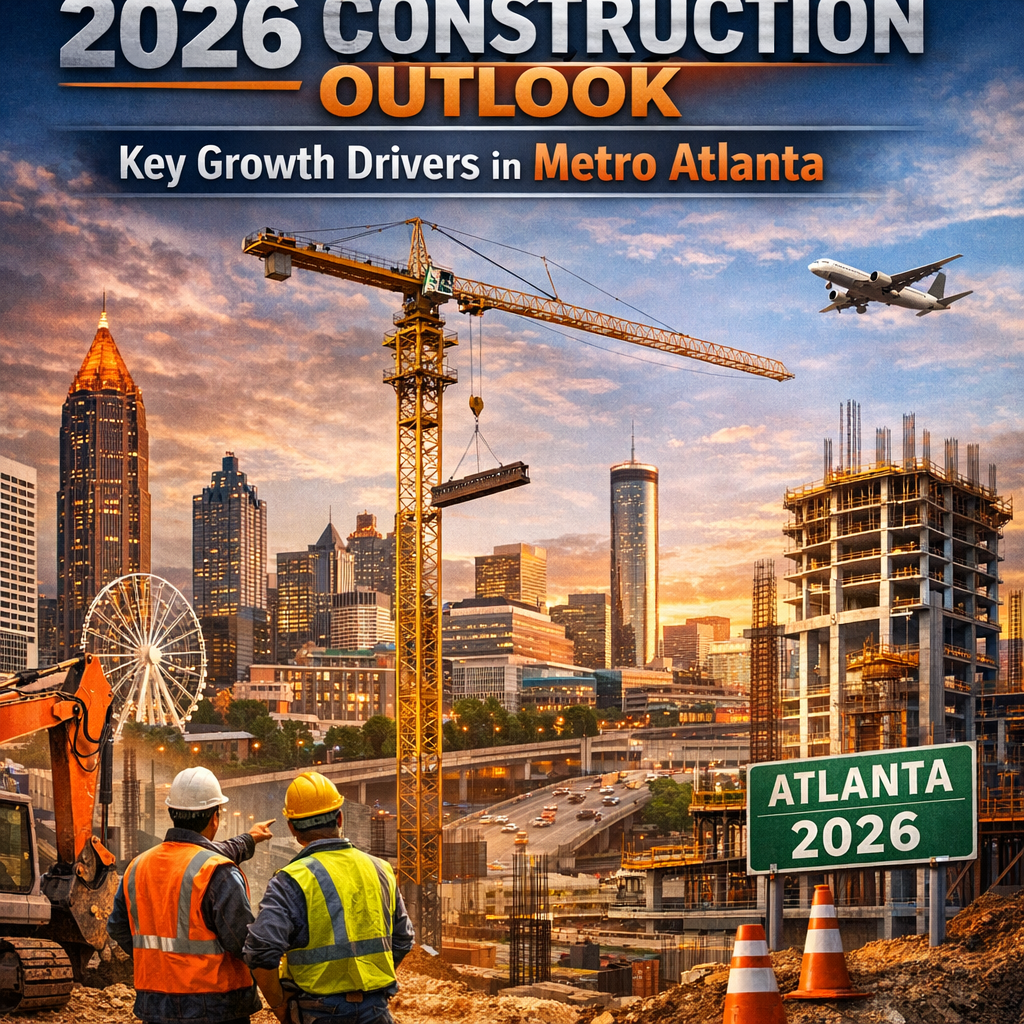
2026 Construction Outlook: Key Growth Drivers in Metro Atlanta
2026 Construction Outlook: What’s Driving Growth Across Metro Atlanta
Metro Atlanta is poised for significant growth in the construction sector by 2026. Thanks to a combination of favorable economic policies, technological advancements, and a booming real estate market, the area is experiencing a development renaissance that promises new opportunities and challenges. This article delves into the key factors driving this growth and what they mean for businesses and residents of Metro Atlanta.
Economic and Demographic Growth
Population Increase
Metro Atlanta continues to be an attractive destination for individuals and families, contributing to its population growth. This influx is a primary driver for new residential constructions, from single-family homes to multi-use high-rise buildings. The growing population demands more infrastructure, shopping centers, schools, and healthcare facilities, providing ample opportunities for the construction industry.
Business Expansions and Relocations
Atlanta’s business-friendly environment, characterized by favorable tax structures and supportive government policies, encourages businesses to set up or expand their operations. This influx of companies has led to increased demand for commercial and industrial construction, further fueling the local construction sector.
Technological Advancements in Construction
Innovative Building Technologies
Advances in technology have made construction faster, safer, and more cost-effective. From 3D printing of building materials to the use of drones for site surveying, technology is playing a crucial role in shaping the future of construction in Atlanta. These innovations are not only enhancing construction practices but are also improving the sustainability and efficiency of new structures.
Smart City Initiatives
Atlanta is embracing the smart city concept, integrating technology such as IoT (Internet of Things) into its urban planning and infrastructure. This has led to a surge in smart housing developments and the modernization of public utilities, which require sophisticated construction techniques and experienced contractors.
Real Estate Market Dynamics
Residential Real Estate Boom
The real estate market in Metro Atlanta is booming, with a sharp increase in the demand for housing spurred by the ongoing population growth and economic stability. The rise in property values has encouraged more developers to invest in residential projects, promising a steady stream of work for local construction companies.
Commercial Property Development
Following the residential trend, there is also a notable increase in commercial property developments, including office spaces, retail complexes, and leisure facilities. This trend is supported by the growing workforce and expanding corporate presence in the area, necessitating more commercial spaces.
Infrastructure and Transportation Projects
Government and public-private partnerships are investing heavily in infrastructure to support the burgeoning growth of Metro Atlanta. This includes major improvements in transportation such as the expansion of the Atlanta Metro system and the construction of new highways and bridges. These projects are critical in supporting the region’s growth and provide numerous opportunities for construction firms specializing in large-scale infrastructure.
Environmental Considerations and Sustainability
With an increase in regulatory focus on environmental sustainability, new construction projects are required to comply with stricter environmental standards. This has led to a growth in green building practices and certifications like LEED. Construction companies in Atlanta are adapting by incorporating sustainable materials and energy-efficient technologies into their building designs and practices.
Challenges and Opportunities
Labor Shortages
Despite the booming construction sector, one significant challenge is the shortage of skilled labor. This issue could potentially slow down project timelines and increase labor costs. However, it also opens opportunities for training and education in construction trades, drawing more professionals into the market.
Regulatory Environment
Navigating the complex regulatory environment can be a challenge for construction companies but staying compliant is crucial for securing contracts and avoiding legal issues. The dynamic nature of construction laws means companies must be adept at adapting to new regulations and standards.
Conclusion
The 2026 outlook for construction in Metro Atlanta is robust, underpinned by economic and demographic growth, technological advancements, and a strong real estate market. While challenges like labor shortages and regulatory navigation exist, the opportunities for development and innovation in the construction sector are ample. Companies and workers ready to embrace these changes can expect to thrive in the bustling construction landscape of Metro Atlanta.