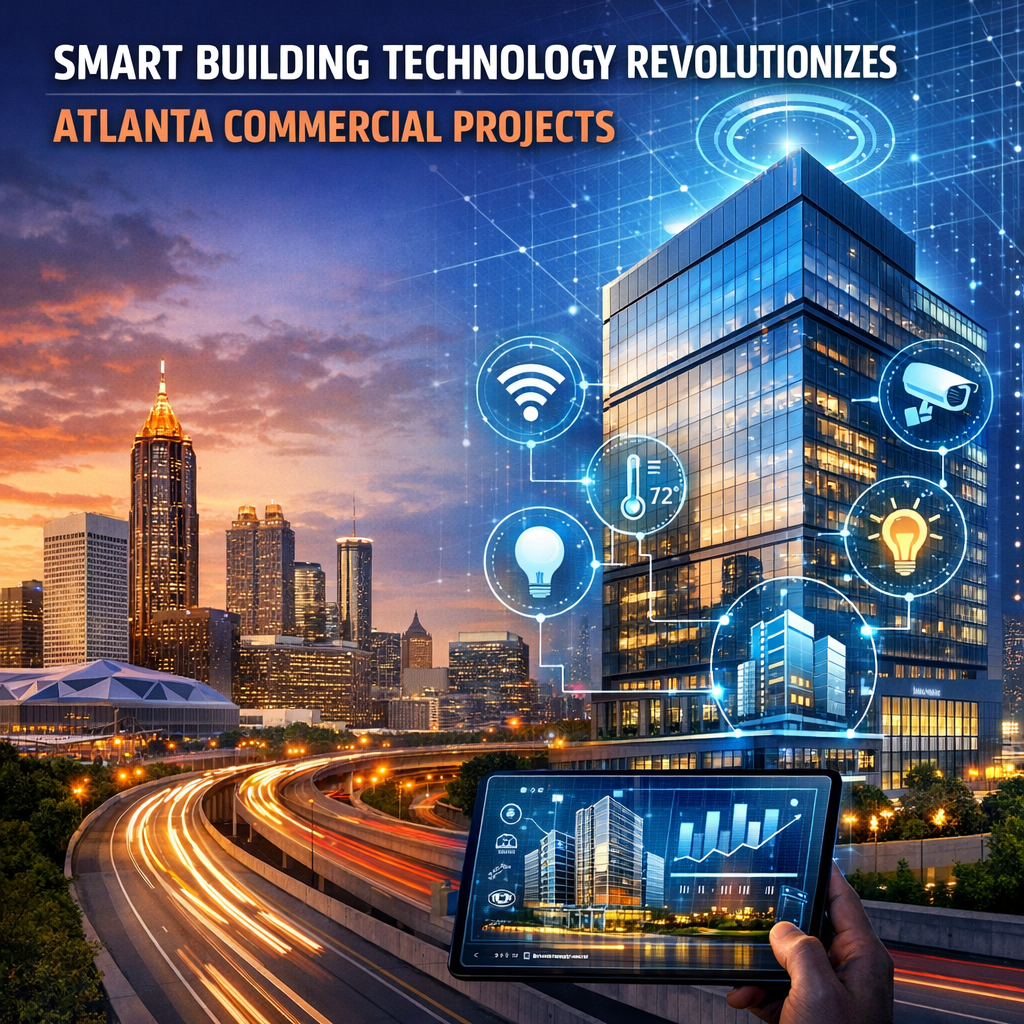
Smart Building Technology Revolutionizes Atlanta Commercial Projects
How Smart Building Technology Is Transforming Atlanta Commercial Projects
Atlanta, a vibrant hub for commerce and culture, is witnessing a remarkable transformation, largely fueled by the integration of smart building technology in its commercial renovations and constructions. This innovative technology is not only redefining the skyline but also how businesses operate within the city.
What is Smart Building Technology?
Smart building technology involves the use of interconnected technologies that manage, monitor, and control various building functions. These functions include heating, ventilation, air conditioning systems (HVAC), lighting, security operations, and more, all through a network of sensors and microchips. This technology ensures buildings are more energy-efficient, sustainable, and occupant-friendly.
Impact on Energy Efficiency
One of the most significant impacts of smart building technology is on energy efficiency. Commercial buildings in Atlanta are increasingly equipped with systems that can automatically adjust lighting and temperature based on occupancy and time of day. Features such as:
- Automated HVAC systems that adapt to weather conditions and occupancy
- Intelligent lighting systems that reduce power consumption during daylight
These advancements not only lower utility costs but also contribute to the city’s goals for sustainability and reduced carbon footprint.
Enhancing Building Operations and Maintenance
Smart technology enables buildings to be maintained in a more predictive manner. Sensors can detect issues like leaks or failures before they become major problems, allowing for immediate response and preventing costly repairs and downtime. This proactive approach to maintenance is revolutionizing the way commercial properties are managed in Atlanta, with benefits such as:
- Reduced operational costs
- Increased lifespan of building equipment
- Enhanced safety and security systems
Improving Occupant Experience
The quality of the work environment directly influences productivity and job satisfaction. Smart buildings in Atlanta are designed with the occupants’ comfort in mind. The integration of technology such as:
- Automated environmental controls for personalized workspace conditions
- Advanced security and access control systems for enhanced safety
These features create a more comfortable, secure, and efficient work environment, drawing more businesses and talent to the area.
Contributing to Real Estate Value
The incorporation of smart technologies significantly boosts the value of commercial real estate. Properties equipped with these modern features tend to attract more tenants, retain them for longer periods, and command higher rents. This is particularly evident in Atlanta’s commercial sectors, where high-tech offices and retail spaces are becoming the norm.
Case Studies in Atlanta
Several projects in Atlanta exemplify the use of smart building technology:
Ponce City Market
One of the largest and most famous redevelopment projects in Atlanta, Ponce City Market has integrated smart tech in various ways, from energy-efficient HVAC systems to smart water management. These modifications have turned a historic building into one of the most desirable business locations in the city.
Tech Square
Tech Square in Midtown Atlanta is another prime example, hosting an array of startups and tech giants alike. The area is outfitted with cutting-edge smart technologies that control everything from traffic lights to public Wi-Fi, creating a uniquely efficient business ecosystem.
Challenges and Future Directions
Despite the numerous benefits, the adoption of smart building technology comes with challenges. Initial costs for implementing these technologies can be high, and there’s also the need for ongoing management and cybersecurity measures to protect against potential digital threats.
However, as technology advances and becomes more cost-effective, and as the benefits continue to prove substantial, more and more buildings in Atlanta are expected to transition to smart technologies. Experts predict that the future commercial landscape of Atlanta will be dominated by these intelligent structures, leading to a more sustainable, efficient, and economically vibrant city.
Conclusion
Smart building technology is no longer a futuristic concept but a current reality that is reshaping Atlanta’s commercial projects. By improving energy efficiency, enhancing building operations, and offering a superior occupant experience, this technology is setting a new standard for commercial spaces. As Atlanta continues to grow and evolve, smart buildings are expected to play a pivotal role in its development, making it an even more attractive place for businesses and professionals. The continuous innovative spirit thriving in the city promises an exciting future for Atlanta’s commercial sectors.