
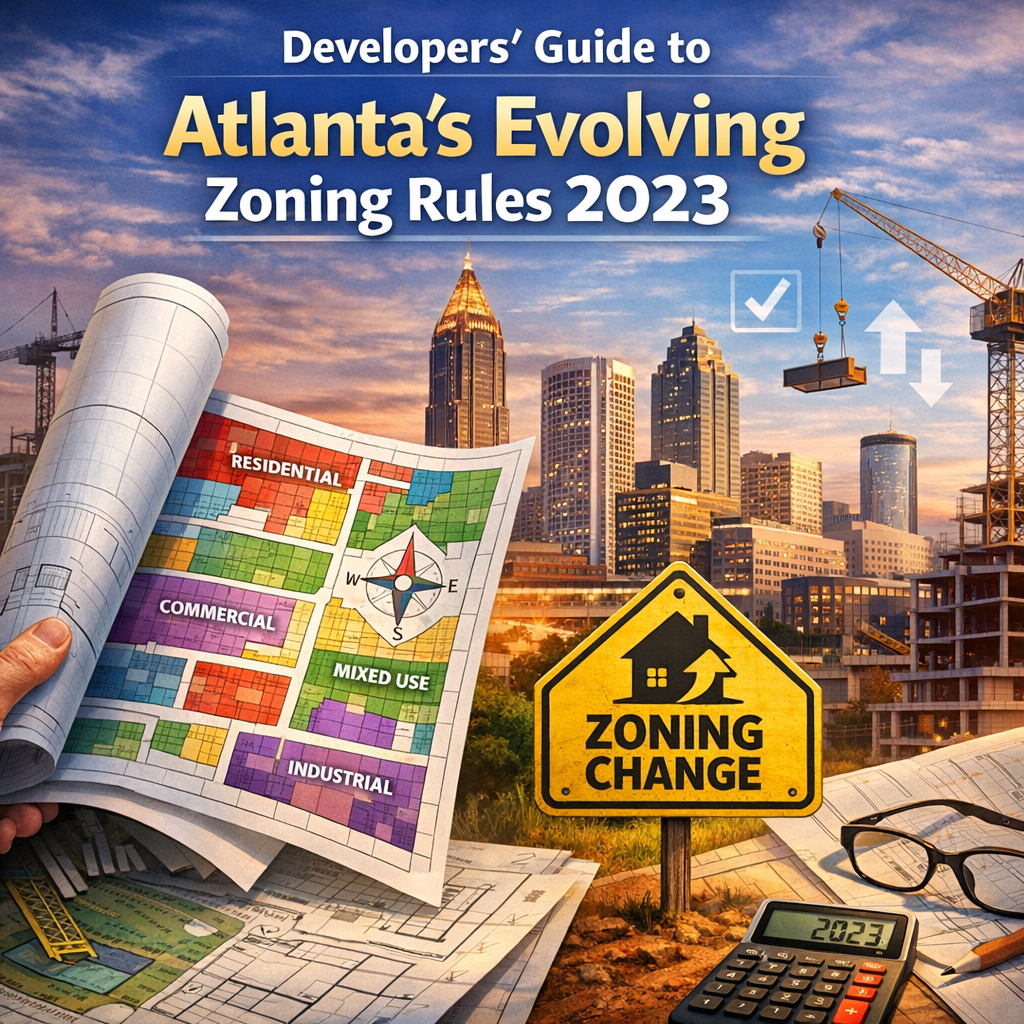
Developers’ Guide to Atlanta’s Evolving Zoning Rules 2023
What Developers Need to Know About Atlanta’s Rapidly Changing Zoning Rules
Atlanta is currently undergoing significant changes in its zoning regulations, a movement driven by the city’s expanding population and the ongoing need for sustainable development. For developers and investors, these changes have profound impacts on how properties can be developed, used, and valued. In this post, we will delve into the critical aspects of Atlanta’s rapidly changing zoning rules, highlighting what developers must keep in mind to navigate these alterations successfully.
Understanding Zoning Changes
The Drive for Change
Atlanta’s zoning initiatives are primarily aimed at promoting urban density and mixed-use developments. This aligns with the broader objectives of reducing urban sprawl, enhancing transportation efficiency, and providing more affordable housing options. As environmental concerns and population dynamics evolve, the city’s approach to zoning adapts in response.
Key Changes Explained
Recent amendments to zoning laws have been groundbreaking. Some of the most notable changes include:
- Increased Density Allowances: In many areas, density restrictions have been eased, allowing developers to build more units per acre.
- Mixed-use Development Encouragements: Zoning codes are increasingly favoring mixed-use designs that combine residential, commercial, and industrial spaces.
- Adjustments in Height Restrictions: Certain districts now permit taller structures, a pivotal change that aims to foster vertical growth over horizontal spread.
- Streamlined Approvals: To spur development, Atlanta has worked towards reducing the bureaucratic hurdles associated with getting projects off the ground.
Developers should keep abreast of these changes to optimize their planning and execution strategies.
Potential Opportunities for Developers
With new zoning rules come new opportunities. Here are several areas where developers might benefit:
- Increased Property Values: Areas with relaxed density regulations and heightened permissible building heights are likely to see an uptick in property values.
- Diverse Development Options: The push towards mixed-use developments opens up a plethora of opportunities to innovate with property offerings, potentially attracting a broader market.
- Sustainability Incentives: Developers engaging in projects that align with sustainability goals might find themselves eligible for incentives like tax breaks and expedited permitting processes.
Challenges to Anticipate
While the evolving landscape presents numerous opportunities, it also comes with its set of challenges:
- Navigating New Regulations: Keeping up with the latest zoning rules requires continual education and adaptation.
- Community Pushback: Increased density and changes in neighborhood characteristics can lead to resistance from local communities.
- Cost Implications: Adhering to new regulations might entail higher upfront costs for compliance and design adjustments.
Strategic Responses to Zoning Changes
To effectively turn these zoning changes into advantages, developers can adopt several strategic approaches:
- Stay Informed: Regular interaction with Atlanta’s planning and zoning departments can provide early insights into upcoming changes.
- Engage with the Community: Early engagement with community stakeholders can alleviate concerns and foster support for new projects.
- Focus on Sustainability: Embracing sustainable practices can not only align with new regulatory frameworks but also appeal to a more eco-conscious consumer base.
Conclusion
As Atlanta’s zoning laws continue to evolve, staying informed and adaptable is crucial for developers. By understanding and responding proactively to these changes, developers can leverage new opportunities while mitigating potential drawbacks. As the city grows, the developers who will thrive are those who can seamlessly integrate the new zoning paradigms into their project strategies.