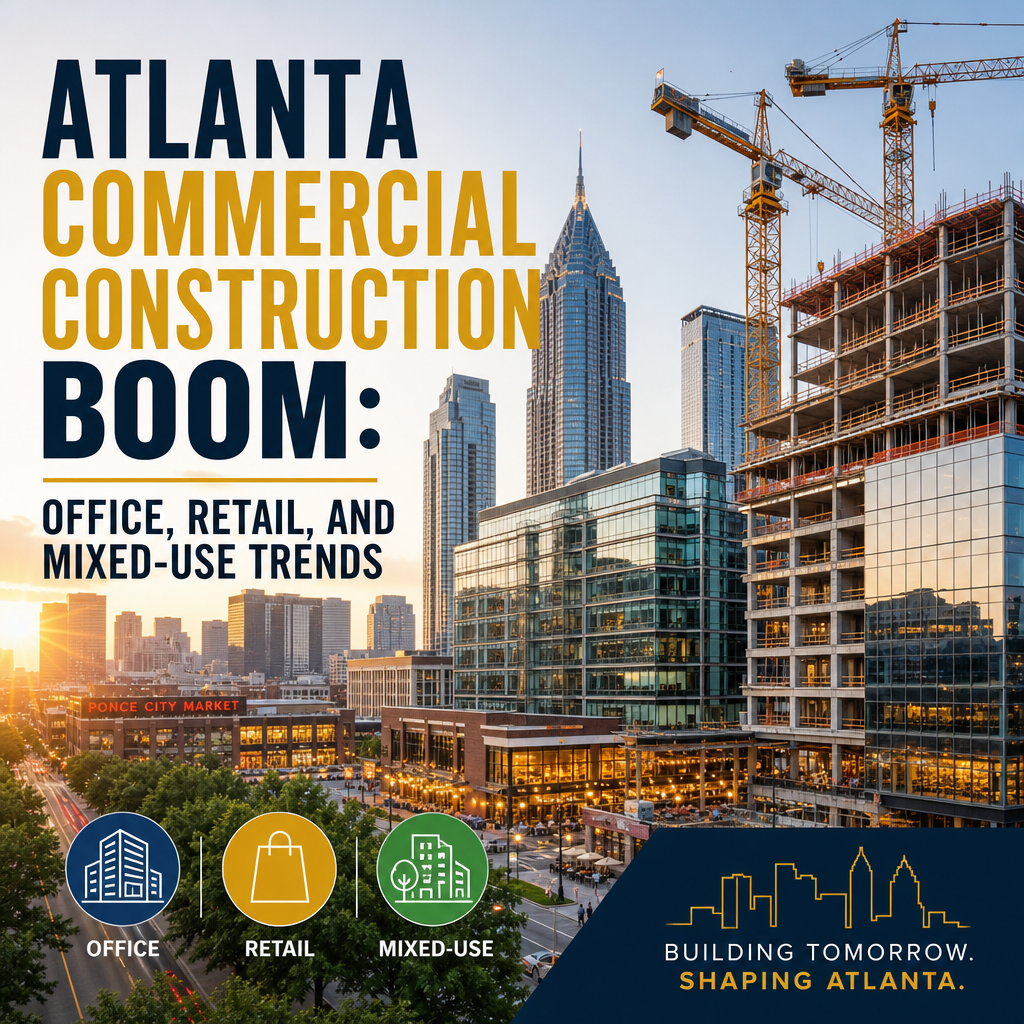
Atlanta Commercial Construction Boom: Office, Retail, and Mixed-Use Trends
Inside Atlanta’s Commercial Construction Boom: Office, Retail, and Mixed-Use Trends
Atlanta has become one of the most active development markets in the Southeast. From skyline-changing office towers to neighborhood retail centers and large mixed-use districts, the city is in the middle of a major commercial construction boom. Growth in population, business investment, and consumer demand is reshaping how and where projects are built.
What makes Atlanta stand out is not just the volume of construction, but the variety. Developers are responding to changing work patterns, shifting retail habits, and the demand for live-work-play environments that bring several uses into one destination.
Why Atlanta Keeps Building
Atlanta’s commercial market benefits from several strong fundamentals. The metro area continues to attract new residents, major employers, and corporate relocations. Its role as a transportation hub also makes it attractive for logistics, distribution, and office-based businesses.
At the same time, the city’s development culture encourages reinvestment. Older properties are being torn down, renovated, or repositioned to meet modern needs. That mix of greenfield construction and redevelopment keeps the pipeline busy across multiple property types.
Key drivers behind the boom
- Population growth across the metro area
- Corporate relocations and expansions
- Strong demand for updated workplaces
- Retail redevelopment near dense neighborhoods
- Rising interest in mixed-use districts
Office Construction Is Evolving, Not Disappearing
Office construction in Atlanta is no longer just about adding more square footage. It is about creating spaces that support flexibility, wellness, and collaboration. Employers want buildings that can help attract talent, while workers expect better amenities and easier access to transit, dining, and services.
New office projects often feature open layouts, high-end finishes, outdoor space, and integrated technology. In many cases, they are part of larger mixed-use developments that combine residential, retail, and hospitality components.
What modern office tenants want
- Efficient floor plates
- Flexible layouts for hybrid work
- Fitness and wellness features
- Parking and transit access
- On-site food, meeting, and social spaces
A lot of Atlanta’s office growth is concentrated in neighborhoods that already have strong identity and walkability. These submarkets offer the kind of environment that helps office users compete in a more selective leasing market.
Retail Construction Is About Experience
Retail development in Atlanta has shifted away from traditional enclosed formats and toward experiential, community-oriented spaces. Consumers still shop, but they also want places to eat, gather, and spend time. That has changed the way retail centers are designed and built.
Instead of standalone stores, many new projects focus on retail as part of a larger destination. Restaurants, service tenants, fitness studios, and entertainment concepts now play a much bigger role in the tenant mix.
Common retail trends in Atlanta
- Small-format storefronts in walkable districts
- Adaptive reuse of older shopping centers
- Grocery-anchored developments
- Restaurant-heavy tenant mixes
- Outdoor-oriented plazas and courtyards
Retail construction is also being influenced by residential growth. As more people move into dense neighborhoods, the demand for everyday retail near home continues to rise. That has made convenience and accessibility especially important in project planning.
Mixed-Use Projects Are Defining the Market
If one type of development best captures Atlanta’s current direction, it is mixed-use. These projects combine office, retail, residential, hospitality, and public space in one connected environment. They are popular because they create built-in activity throughout the day and reduce dependence on a single property type.
Mixed-use construction also gives developers more flexibility. If office demand softens, residential or retail components can help support the overall project. That balance has made mixed-use a favorite strategy in fast-growing urban and suburban areas alike.
Why mixed-use keeps gaining traction
- It creates a stronger sense of place
- It supports multiple revenue streams
- It appeals to employers, residents, and visitors
- It can revitalize underused land
- It encourages walkability and public interaction
In Atlanta, many of the most recognizable developments are built around this concept. These projects often anchor larger redevelopment efforts and can transform entire districts over time.
The Construction Landscape Is Also Changing
The commercial construction boom in Atlanta is not just about what gets built, but how it gets built. Rising material costs, labor shortages, and tighter schedules have made efficiency more important than ever. Developers and contractors are placing more emphasis on planning, preconstruction coordination, and value engineering.
Sustainability is another growing priority. Energy-efficient systems, improved stormwater management, and better site planning are becoming standard expectations in many projects. As tenants and investors pay closer attention to long-term operating costs, green building practices are moving further into the mainstream.
What to Watch Next
Atlanta’s commercial pipeline is likely to remain active, but the mix may continue to evolve. Office development will probably stay selective, focusing on high-quality buildings in strong locations. Retail construction will keep leaning toward experience-driven and neighborhood-based projects. Mixed-use development, meanwhile, will remain one of the most important growth strategies in the market.
For builders, investors, and property owners, the big opportunity lies in understanding how these trends overlap. The most successful projects are not simply adding space. They are creating environments that reflect how people work, shop, and live today.
Conclusion
Atlanta’s commercial development story is being written through office reinvention, retail modernization, and mixed-use growth. The city’s ability to adapt to changing market demands has helped fuel a construction cycle that remains one of the strongest in the country.
As the market continues to mature, the projects that thrive will be the ones that combine location, flexibility, and long-term value. In a city as dynamic as Atlanta, that formula is shaping the next generation of commercial construction.