Atlanta’s Rise as a Sustainable Commercial Construction Hub
Why Atlanta Is Becoming a Hub for Sustainable Commercial Construction
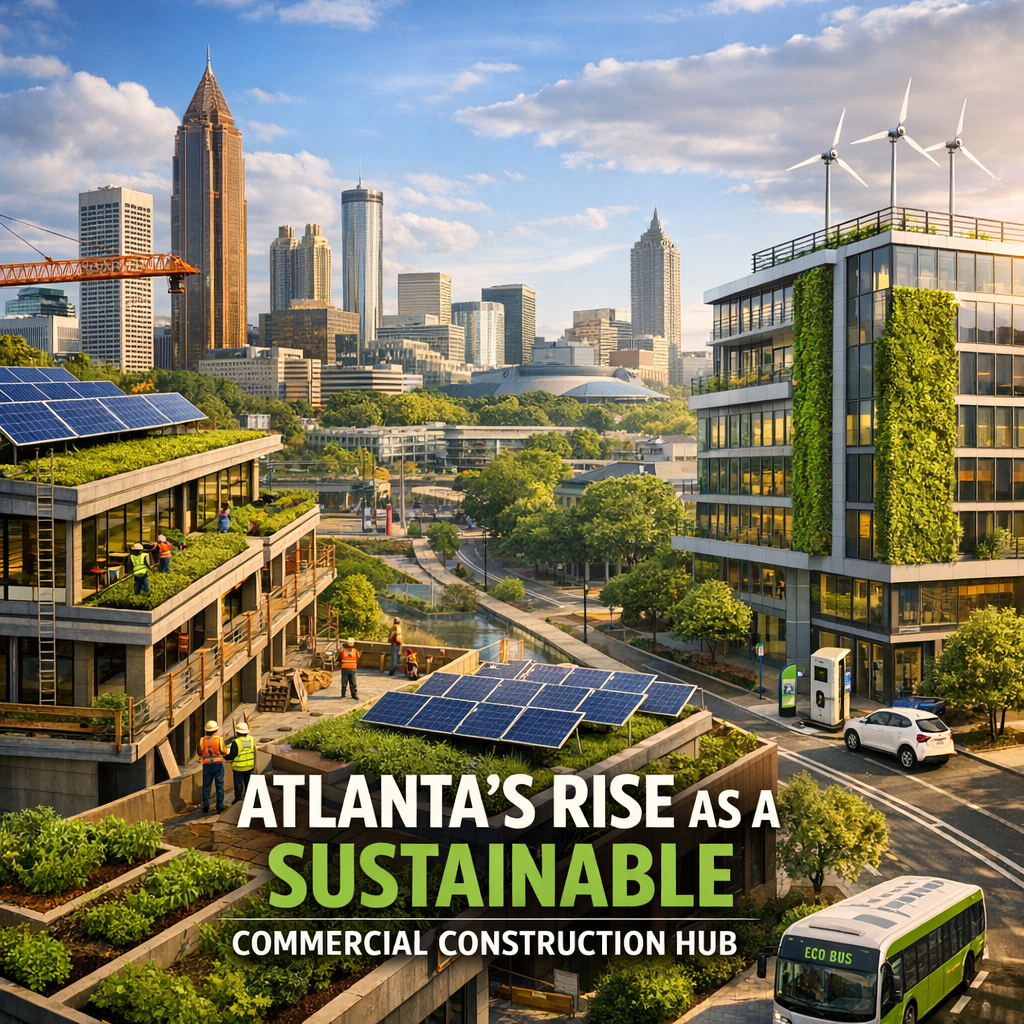
Atlanta is emerging as a frontrunner in the sustainable building movement, particularly in the realm of commercial construction. This transformation is driven by a unique combination of innovative building practices, supportive local policies, and a growing awareness of environmental issues. Here’s why Atlanta is on the path to becoming a key player in promoting and implementing sustainable commercial construction practices.
A Climate of Innovation
Pioneering Sustainable Building Techniques
Atlanta’s adoption of cutting-edge sustainable building technologies has positioned it at the forefront of this global trend. From energy-efficient building designs to the utilization of recycled materials, the city’s commercial sectors are embracing practices that not only reduce environmental impact but also enhance building efficiency and lower operational costs.
The Rise of Green Certifications
The number of buildings obtaining LEED certification in Atlanta is on the rise. This trend underscores a growing commitment to sustainability that resonates not just with developers and architects, but also with clients and tenants who are increasingly demanding greener living and working spaces.
Supportive Policies and Incentives
Government Leadership in Green Initiatives
The City of Atlanta has implemented various policies that encourage sustainable construction. These include tax incentives for green buildings and regulations that promote low-impact developments. Such supportive policy frameworks are crucial in motivating developers to invest in sustainable building practices.
Grants and Financial Incentives
To further bolster sustainable construction, Atlanta offers numerous financial incentives. These initiatives reduce the economic burden on businesses opting for green solutions in their construction projects, making sustainable practices not only environmentally beneficial but also economically viable.
Community and Industry Engagement
Collaborative Efforts for Sustainability
Atlanta’s progress in sustainable construction is also the result of concerted efforts between the city, construction companies, environmental groups, and academic institutions. These collaborations are fostering a community strongly focused on sustainable development and innovation.
Educational Programs and Workshops
Ongoing educational programs raise awareness and skill levels among builders and contractors about sustainable practices. By increasing expertise in green building, Atlanta is ensuring that the workforce is ready to meet the demands of modern construction projects.
Environmental and Economic Impacts
Reducing Carbon Footprints
Sustainable commercial construction helps in significantly reducing the carbon footprint of buildings. Efficient energy use, lower emissions, and reduced waste all contribute to mitigating the city’s overall environmental impact.
Economic Benefits Through Green Building
Adopting sustainable construction practices often leads to lower operating costs for businesses due to savings on energy, water, and maintenance. Moreover, sustainable buildings typically have higher property values and attract tenants more easily, proving that green investments are financially sound.
A Look Ahead
Atlanta’s trajectory towards becoming a hub for sustainable commercial construction looks promising. With ongoing advancements in technology, supportive community and government initiatives, and a solid foundation in education and collaboration, Atlanta is setting a sustainable example for other cities to follow.
In conclusion, the synergy of innovative construction technologies, effective policies, and active community participation makes Atlanta a burgeoning leader in the realm of sustainable commercial construction. As this trend continues, it can be expected that the city will not only help pave the way for environmentally responsible construction practices globally but also reap significant economic benefits from its green building initiatives.