
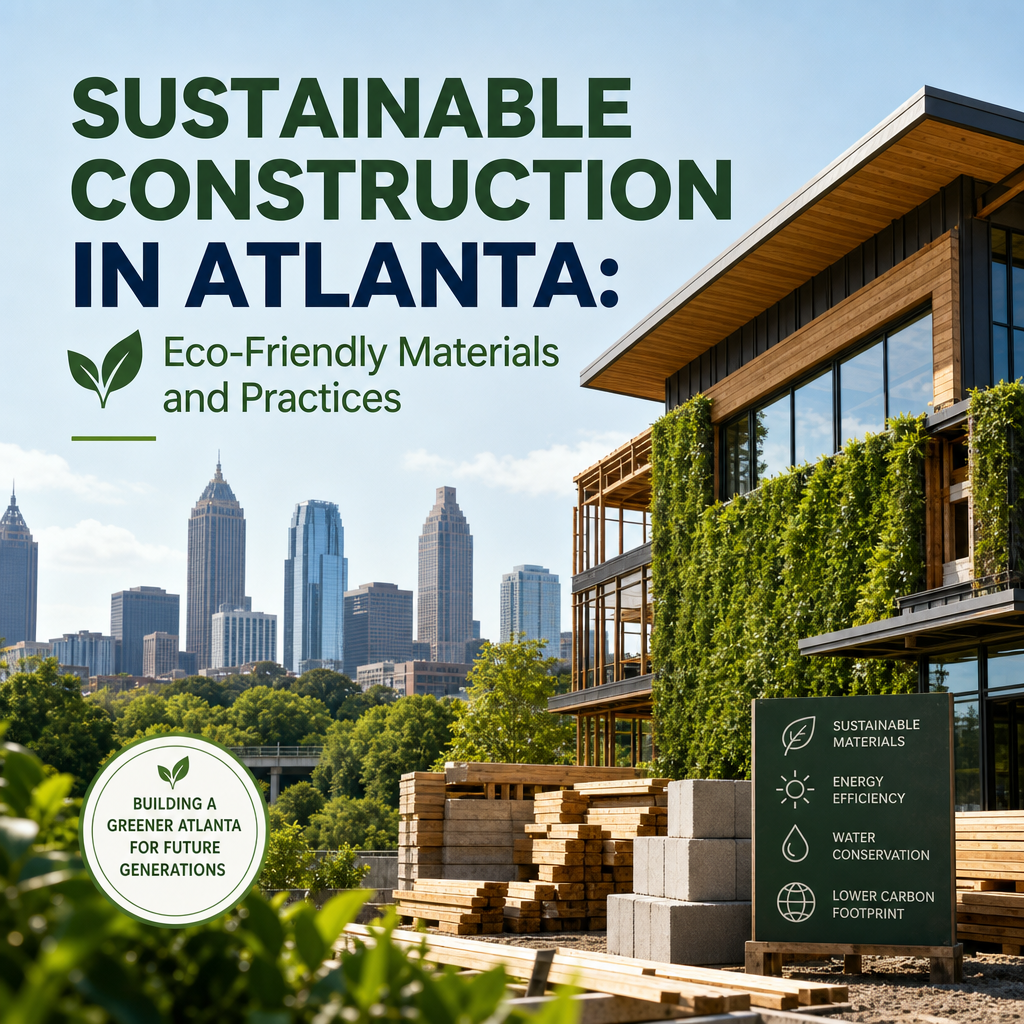
Sustainable Construction in Atlanta: Eco-Friendly Materials and Practices
The Rise of Sustainable Construction in Atlanta: Eco‑Friendly Materials and Practices
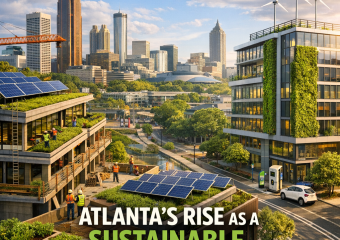
Atlanta is growing fast, and with that growth comes a bigger responsibility to build smarter. Across the city, developers, architects, and homeowners are embracing sustainable construction in Atlanta as a practical way to reduce environmental impact while creating healthier, more efficient buildings.
From energy-saving designs to recycled materials, green building is no longer a niche trend. It has become a core part of how Atlanta is shaping its future.
Why Sustainable Construction Is Gaining Momentum
Atlanta’s rapid development has put pressure on land, energy, and infrastructure. At the same time, more property owners are looking for buildings that cost less to operate and last longer.
Sustainable construction addresses both needs.
It focuses on:
- Lowering energy and water use
- Reducing waste during construction
- Choosing materials with smaller environmental footprints
- Improving indoor air quality
- Designing buildings that perform well over time
In a city known for hot summers and rising energy demands, these benefits matter. Green construction is helping Atlanta adapt to changing climate conditions while supporting long-term economic value.
Eco-Friendly Materials Shaping Modern Builds
One of the biggest shifts in sustainable construction in Atlanta is the move toward eco-friendly materials. These products are often made from recycled, renewable, or locally sourced content, which helps reduce emissions and waste.
Popular sustainable materials include:
- Reclaimed wood: Gives new life to old materials and adds character to interiors and exteriors.
- Recycled steel: Strong, durable, and widely used in structural frames.
- Bamboo: A fast-growing renewable resource that works well for flooring and finishes.
- Recycled concrete aggregate: Helps reduce landfill waste and lowers the demand for virgin materials.
- Low-VOC paints and adhesives: Improve indoor air quality by reducing harmful chemicals.
- Insulated panels and high-performance windows: Cut energy use by improving thermal efficiency.
These materials are not only better for the environment. They can also improve building performance and reduce maintenance costs over time.
Smarter Practices on the Job Site
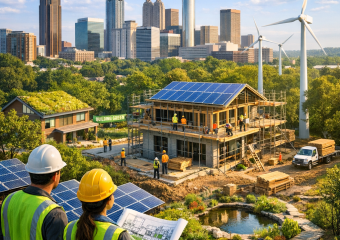
Eco-friendly materials are only one piece of the puzzle. Green construction also depends on better building practices. In Atlanta, contractors are increasingly adopting methods that reduce waste and use resources more efficiently.
Common sustainable practices include:
- Waste sorting and recycling on-site to keep reusable materials out of landfills
- Efficient project planning to reduce excess ordering and material waste
- Water-saving systems such as low-flow fixtures and rainwater collection
- Energy-efficient HVAC systems that lower electricity consumption
- Passive design strategies that maximize natural light and shade
- Permeable paving and green landscaping to manage stormwater runoff
These methods help construction teams complete projects with less environmental impact while meeting modern performance standards.
The Role of Energy Efficiency
Energy efficiency is one of the most important parts of sustainable construction in Atlanta. Buildings account for a major share of energy use, especially in a climate where cooling needs can be high for much of the year.
Builders are responding with smarter design choices.
This includes better insulation, reflective roofing, advanced windows, and efficient heating and cooling systems. Some projects also incorporate solar panels or other renewable energy technologies to reduce dependence on the grid.
For property owners, these features can lead to lower utility bills and better resale value. For the city, they mean reduced demand on energy infrastructure and fewer emissions overall.
Healthier Spaces for People
Sustainable construction is not just about the environment. It also creates healthier spaces for the people who live and work inside them.
Many green buildings are designed to improve ventilation, reduce exposure to toxins, and bring in more natural light. These features can support comfort, productivity, and overall well-being.
In homes, that may mean cleaner air and fewer allergens. In offices or commercial spaces, it can mean a more pleasant and productive environment for employees and visitors.
As more Atlantans prioritize health and quality of life, this human-centered approach is becoming a major selling point.
Challenges and Opportunities Ahead
Although interest is growing, sustainable construction still faces some barriers. Eco-friendly materials can sometimes cost more upfront, and not every project team has the same level of experience with green building methods.
However, the long-term savings often outweigh the initial investment.
Incentives, updated building codes, and growing public demand are making it easier for developers to choose sustainable options. As more successful projects appear across the city, green building is becoming more accessible and more common.
A Greener Future for Atlanta
The rise of sustainable construction in Atlanta reflects a larger shift in how cities are built. Instead of focusing only on speed and cost, more projects are now balancing environmental responsibility, efficiency, and occupant well-being.
That balance is creating buildings that are better for people and better for the planet.
As Atlanta continues to grow, eco-friendly materials and practices will play an essential role in shaping a cleaner, healthier, and more resilient city.