
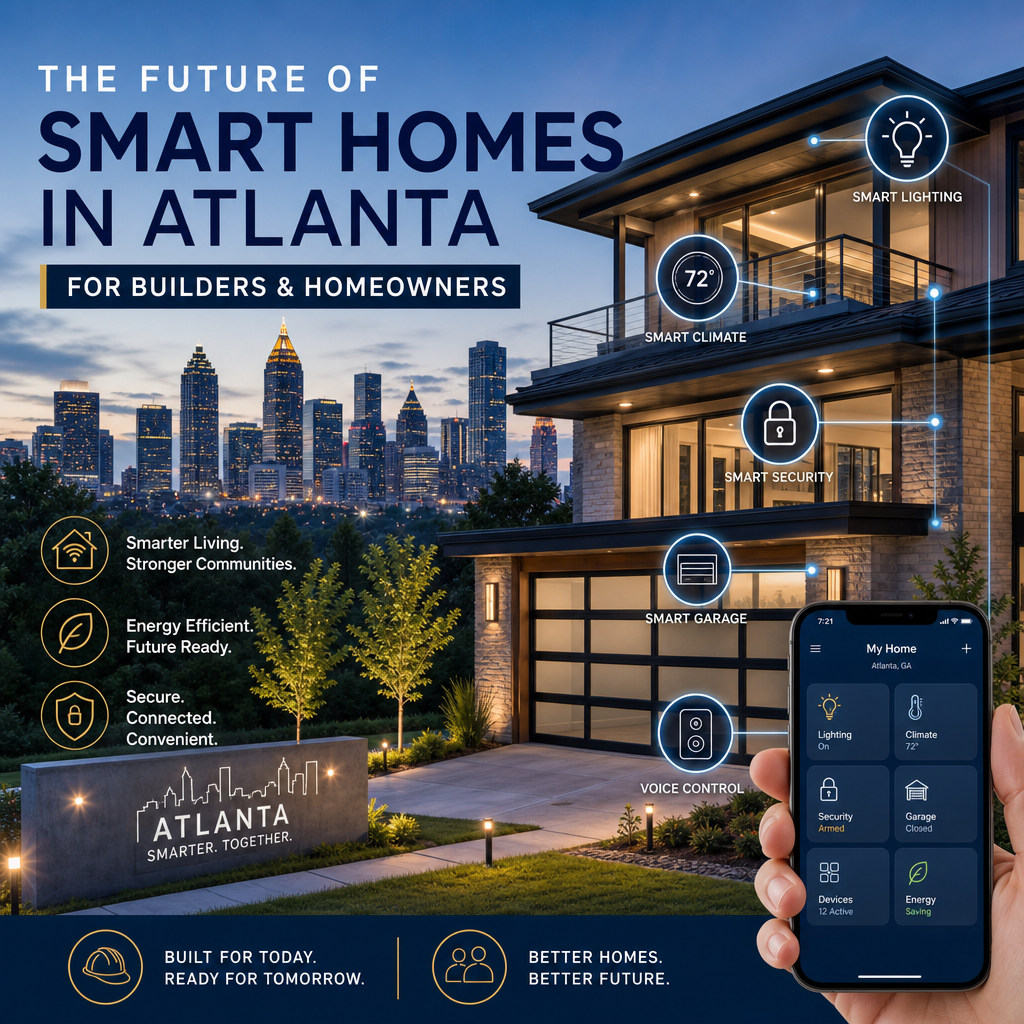
The Future of Smart Homes in Atlanta for Builders and Homeowners
The Future of Smart Homes in Atlanta: What Builders and Homeowners Should Expect
Atlanta has always been a city that blends tradition with innovation, and that makes it a natural fit for the next generation of connected living. As technology becomes more affordable and more useful, smart homes in Atlanta are moving from luxury upgrades to standard expectations in new construction and remodels.
For builders, this shift means planning homes that are more adaptable, secure, and energy-efficient from the start. For homeowners, it means greater convenience, lower utility costs, and more control over daily life. The future of smart homes in Atlanta is not just about gadgets—it is about creating homes that work better for modern living.
Why Smart Home Demand Is Growing in Atlanta
Several trends are driving the rise of smart home features across the metro area.
First, Atlanta continues to grow quickly. New neighborhoods, infill developments, and suburban expansions are giving builders more opportunities to include connected technology from the beginning. Buyers increasingly expect these features, especially in competitive housing markets.
Second, homeowners are more aware of energy efficiency and security than ever before. Smart thermostats, lighting, cameras, and leak detectors offer practical benefits that go beyond convenience. In a city with hot summers, unpredictable weather, and busy households, these tools can make everyday life easier and safer.
Finally, remote work has changed how people use their homes. Many families now want spaces that can support work, entertainment, health, and security all at once. Smart technology helps make that possible.
What Builders Should Expect
Builders in Atlanta should assume that smart home readiness will soon be a basic selling point rather than an upgrade. That means planning ahead for the infrastructure that supports connected devices.
1. Stronger wiring and network planning
Even if wireless technology continues to improve, reliable connectivity still depends on a solid foundation. Builders should consider:
- Pre-wiring for internet access in key rooms
- Centralized network hubs
- Strong Wi-Fi coverage throughout the home
- Power access for future devices
Homes that are built with flexibility in mind will be easier for buyers to customize later.
2. More integrated systems
Instead of separate devices that each need their own app, buyers will increasingly want systems that communicate with one another. Lighting, HVAC, security, door locks, and entertainment systems may all work together through one platform.
This creates a better experience for homeowners and gives builders a chance to offer more polished, premium homes. Integration will likely become a standard expectation in mid-range and high-end developments.
3. Energy performance as a selling feature
Atlanta buyers are paying attention to monthly costs, not just purchase prices. Smart HVAC controls, automated lighting, and energy monitoring systems can help homes run more efficiently.
Builders who highlight energy savings will have a stronger advantage. Over time, smart features may influence appraisals, resale value, and buyer interest just as much as kitchen finishes or bathroom upgrades.
What Homeowners Should Expect
Homeowners should expect smart home features to become more user-friendly, more customizable, and more essential to everyday routines.
Greater convenience
Smart homes make simple tasks easier. Lights can turn on automatically, thermostats can adjust before anyone gets home, and security systems can send alerts directly to a phone. These features save time and reduce stress.
For busy Atlanta households, that convenience is a major appeal.
Better security and awareness
Security remains one of the top reasons people invest in smart home technology. Video doorbells, motion sensors, smart locks, and window sensors provide real-time awareness and more control over who enters the home.
Many homeowners also like the ability to monitor their homes while traveling or working late. That peace of mind is becoming a core part of the smart home experience.
More personalized living
The future of smart homes in Atlanta will be increasingly tailored to individual lifestyles. A family with young children may prioritize security and temperature control, while empty nesters may focus on lighting, voice assistants, and maintenance alerts.
The best smart homes will not look the same. They will reflect how people actually live.
The Role of AI and Automation
Artificial intelligence is likely to shape the next major wave of smart home innovation. Rather than requiring homeowners to manually adjust settings, future systems may learn patterns and respond automatically.
For example:
- Thermostats may predict when a home will be empty
- Lighting may adjust based on time of day and occupancy
- Appliances may send maintenance alerts before problems get worse
- Security systems may distinguish routine activity from suspicious behavior
This kind of automation will make homes feel more intuitive. The goal is not just control, but convenience without constant management.
Challenges to Keep in Mind
Even as smart home technology improves, there are still challenges to consider.
Privacy and data security will remain important. Homeowners want connected systems, but they also want control over how their information is used. Builders and manufacturers will need to prioritize secure design and transparent settings.
Compatibility is another issue. Not every device works seamlessly with every platform, which can frustrate homeowners. Future-ready homes will need to be built with open systems and flexible options.
Finally, cost still matters. While many smart features are becoming more affordable, homeowners will continue to weigh upfront investment against long-term value.
Looking Ahead
The future of smart homes in Atlanta is bright, practical, and increasingly mainstream. Builders who plan for connectivity, energy efficiency, and integration will be better positioned to meet buyer expectations. Homeowners who invest in the right systems will enjoy more comfort, safety, and control.
As Atlanta keeps growing, smart homes will likely become a defining part of the city’s housing landscape. The homes of tomorrow will not just be connected—they will be designed to adapt, learn, and support the people who live in them.