

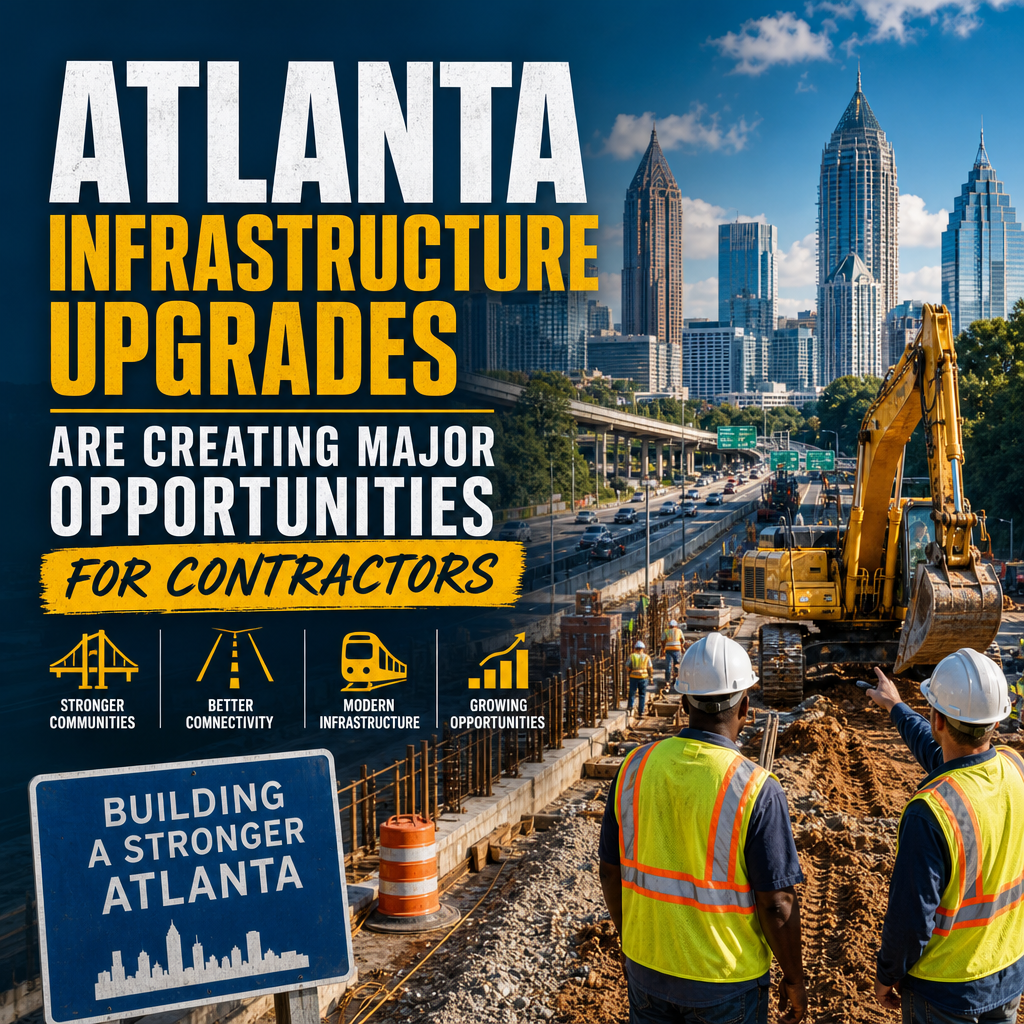
Atlanta Infrastructure Upgrades Are Creating Major Opportunities for Contractors
Why Atlanta’s Infrastructure Upgrades Are Creating Massive Opportunities for Contractors
Atlanta is in the middle of a major infrastructure transformation, and contractors are paying attention. From roads and bridges to transit, utilities, and public works, the city is investing heavily in the systems that keep the metro area moving. For construction firms, specialty contractors, and service providers, this wave of improvement is creating one of the strongest project environments in the Southeast.
A City Growing Faster Than Its Infrastructure
Atlanta has experienced rapid population growth for years, and that growth has put pressure on its transportation networks, water systems, and aging public facilities. As more people move into the region, the demand for reliable infrastructure continues to rise.
That means the city cannot simply patch old systems. It needs large-scale upgrades, long-term planning, and consistent construction support. For contractors, this creates a steady pipeline of opportunities across multiple sectors.
Why demand is increasing
- More residents mean more traffic and wear on roads
- Expanding neighborhoods need new utilities and drainage
- Older infrastructure requires repair or replacement
- Public transit and mobility systems need modernization
- Commercial development depends on upgraded supporting systems
These factors combine to make Atlanta’s infrastructure upgrades a major driver of construction activity.
Major Public Investment Is Fueling Projects
Government funding is one of the biggest reasons contractors are seeing more work in Atlanta. Federal infrastructure programs, state transportation budgets, and local capital improvement plans are all contributing to a higher volume of projects.
These investments often target essential systems such as:
- Highway expansion and resurfacing
- Bridge rehabilitation
- Sewer and stormwater improvements
- Transit station updates
- Water main replacement
- Sidewalk, curb, and pedestrian safety projects
Because many of these projects are publicly funded, they tend to move through long planning cycles and involve multiple subcontracting opportunities. That gives contractors time to prepare bids, build teams, and position themselves for repeat work.
Contractors Benefit from a Wide Range of Project Types
One reason Atlanta’s infrastructure upgrades are so valuable to contractors is the variety of work available. Large public projects often require many different trades, which opens the door for firms of all sizes.
Common contractor opportunities include:
Civil and site work
Excavation, grading, drainage, paving, and utility installation are essential for nearly every infrastructure project.
Electrical and lighting
Street lighting, traffic signals, transit systems, and facility upgrades all need qualified electrical contractors.
Mechanical and plumbing
Water distribution, pump stations, treatment facilities, and public buildings rely on skilled mechanical and plumbing teams.
Concrete and structural work
Bridges, retaining walls, sidewalks, curbs, and structural repairs require concrete expertise.
Environmental and remediation services
Projects involving old infrastructure often need asbestos removal, soil remediation, erosion control, and environmental compliance support.
This diversity makes the market attractive not just for general contractors, but also for specialized subcontractors looking for steady demand.
Private Development Also Gains Momentum
Infrastructure improvements do more than create public works projects. They also make surrounding areas more attractive for private investment. When roads improve, transit access expands, and utilities are upgraded, developers are more likely to launch new commercial, industrial, and mixed-use projects.
That creates a second layer of opportunity for contractors.
A single road widening or transit upgrade can lead to nearby retail centers, apartment complexes, office buildings, and warehouse developments. In other words, infrastructure work helps unlock additional construction demand throughout the region.
Atlanta’s Complexity Rewards Experienced Contractors
Not every market offers the same level of complexity Atlanta does. The city’s dense urban core, busy interstate network, and fast-growing suburbs require contractors who can work in challenging conditions. Projects often involve traffic control, tight schedules, utility coordination, and strict compliance standards.
Contractors that can manage these challenges are in a strong position to win work.
Skills that matter in this market
- Experience with public bidding and procurement
- Ability to coordinate with city, county, and state agencies
- Strong scheduling and project management
- Knowledge of permitting and compliance requirements
- Capacity to work in active, high-traffic environments
Firms that bring this expertise are more likely to build long-term relationships and secure repeat contracts.
Supply Chain and Labor Needs Create More Business
Large infrastructure programs also increase demand for materials, equipment, and labor. That means more opportunities not only for builders, but for vendors and support businesses as well.
Concrete suppliers, trucking companies, equipment rental firms, surveyors, engineering consultants, and safety providers all benefit when infrastructure spending rises. The same is true for skilled labor providers who can help contractors staff projects quickly and efficiently.
As Atlanta’s infrastructure upgrades continue, the ecosystem around construction grows stronger too.
The Long-Term Outlook Remains Strong
The biggest advantage for contractors is that this is not a short-term boom. Infrastructure systems age over decades, and Atlanta’s growth means upgrades will remain necessary for years to come. That creates a long runway of opportunity for firms that know how to adapt and compete.
Contractors who build local relationships, stay informed about public funding, and position themselves for both public and private projects can benefit from this momentum for a long time.
Conclusion
Atlanta’s infrastructure upgrades are creating massive opportunities for contractors because they combine public investment, urban growth, and long-term demand. With projects spanning transportation, utilities, public facilities, and surrounding private development, the market is full of potential for both general and specialized firms.
For contractors ready to work in a fast-moving, high-demand environment, Atlanta offers more than just projects. It offers a chance to grow with one of the country’s most active construction markets.