
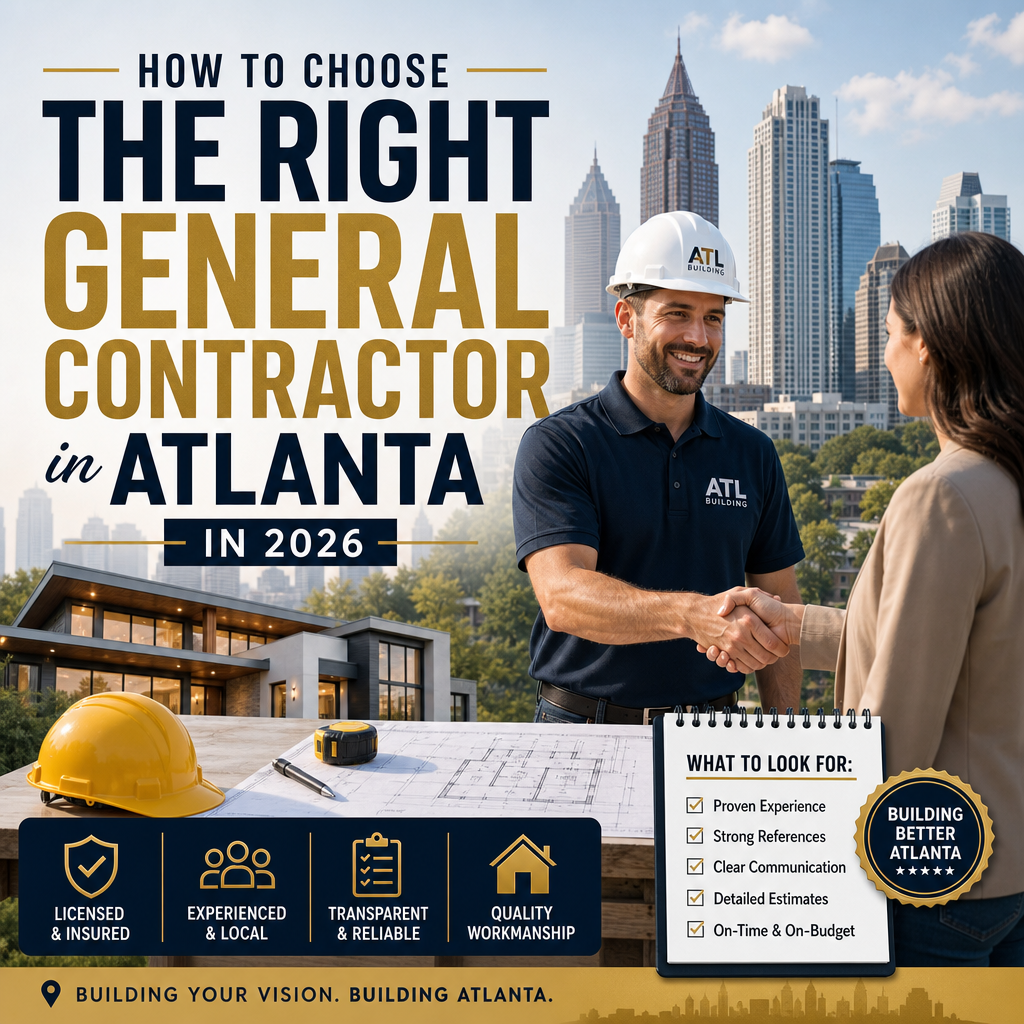
How to Choose the Right General Contractor in Atlanta in 2026
How to Choose the Right General Contractor in Atlanta: A 2026 Expert Checklist
Hiring a general contractor in Atlanta is one of the most important decisions you can make for a remodel, home addition, or commercial buildout. The right contractor keeps the project moving, protects your budget, and helps you avoid costly delays. The wrong one can leave you with missed deadlines, weak communication, and surprise expenses.
In 2026, the best contractors are more than just builders. They are project managers, problem-solvers, and trusted advisors who understand local codes, material trends, and the realities of working in the Atlanta market.
Use this expert checklist to choose with confidence.
1. Start with the Right Type of Contractor
Not every contractor is the right fit for every job. Before you compare bids, make sure the contractor has experience with your specific project type.
Look for relevant experience in:
- Whole-home renovations
- Kitchen and bathroom remodels
- Home additions
- Basement finishing
- Commercial tenant improvements
- New construction
A contractor who mainly handles small repairs may not be equipped for a large-scale renovation. Ask for examples of similar work completed in Atlanta or nearby neighborhoods.
2. Verify Licensing and Insurance
This step is non-negotiable. Any reputable general contractor in Atlanta should be properly licensed and insured.
Confirm these essentials:
- Georgia state or local licensing, if required for the project type
- General liability insurance
- Workers’ compensation coverage
- Bonding, when applicable
Ask for proof, not just verbal assurance. Insurance protects you if someone is injured on site or if property damage occurs during construction.
3. Review Their Reputation
Online reviews are useful, but they should only be one part of your research. In 2026, a contractor’s reputation should be visible across multiple channels.
Check:
- Google reviews
- Houzz or similar home improvement platforms
- Better Business Bureau ratings
- Local community groups and referrals
- Recent project photos and testimonials
Pay attention to patterns. A single negative review is not always a red flag, but repeated complaints about communication, delays, or budget overruns should raise concern.
4. Ask About Their Project Management Process
A successful project depends on clear communication and structured planning. Ask how the contractor manages schedules, subcontractors, permits, and change orders.
Good signs include:
- A dedicated project manager
- Written timelines and milestones
- Regular progress updates
- A clear process for approvals and changes
- Digital tools for communication or document sharing
The best contractors are organized and transparent from the start. If answers are vague, that is a warning sign.
5. Request Detailed Bids, Not Just Ballpark Numbers
Price matters, but the cheapest bid is not always the best choice. A low estimate may leave out key items and lead to costly add-ons later.
A strong bid should include:
- Labor costs
- Material allowances
- Permit fees
- Demolition and cleanup
- Subcontractor costs
- Estimated timeline
- Payment schedule
Compare bids carefully. If one proposal is much lower than the others, ask why. The difference may come from missing scope, lower-quality materials, or unrealistic labor assumptions.
6. Evaluate Communication Style
You will be working closely with your contractor for weeks or months, so communication matters. Choose someone who listens well, explains clearly, and responds in a timely way.
Ask yourself:
- Do they answer questions directly?
- Do they explain technical terms clearly?
- Do they return calls or emails quickly?
- Do they seem respectful of your time and budget?
Trust your instincts. A contractor can have strong credentials and still be a poor fit if communication is inconsistent.
7. Understand Their Subcontractor Network
Most general contractors rely on electricians, plumbers, painters, and other specialists. Ask who they work with and how they choose subcontractors.
You want a contractor who:
- Uses licensed, experienced tradespeople
- Has long-term working relationships
- Oversees subcontractor quality
- Coordinates schedules effectively
A strong subcontractor network often leads to smoother projects and better results.
8. Ask for a Realistic Timeline
Atlanta’s building environment can be affected by permit delays, weather, supply chain issues, and subcontractor availability. A professional contractor should give you a realistic timeline, not just an optimistic one.
Ask:
- When can the project start?
- How long will each phase take?
- What could cause delays?
- How are delays handled?
A contractor who builds in contingency time is usually more experienced than one who promises an unrealistically fast finish.
9. Check the Contract Before Signing
Never begin work without a written contract. It should protect both you and the contractor.
The contract should clearly state:
- Project scope
- Materials and specifications
- Total cost and payment schedule
- Start and completion dates
- Warranty details
- Change order process
- Cleanup expectations
If anything is missing, ask for clarification before signing. A detailed contract helps prevent disputes later.
10. Choose Someone You Trust
At the end of the day, hiring a general contractor in Atlanta is not just about credentials. It is about trust. You need someone who respects your goals, communicates honestly, and delivers quality work.
The best contractor will not pressure you, dodge questions, or make unrealistic promises. Instead, they will provide clear answers, document everything, and keep your project on track.
Final Thoughts
Choosing the right contractor takes time, but the effort pays off. By checking experience, licensing, communication, pricing, and contract details, you can find a professional who fits your project and your expectations.
In a competitive market like Atlanta, the right general contractor can make the difference between a stressful remodel and a smooth, successful build. Use this checklist, compare carefully, and choose a partner who brings both skill and accountability to the job.