
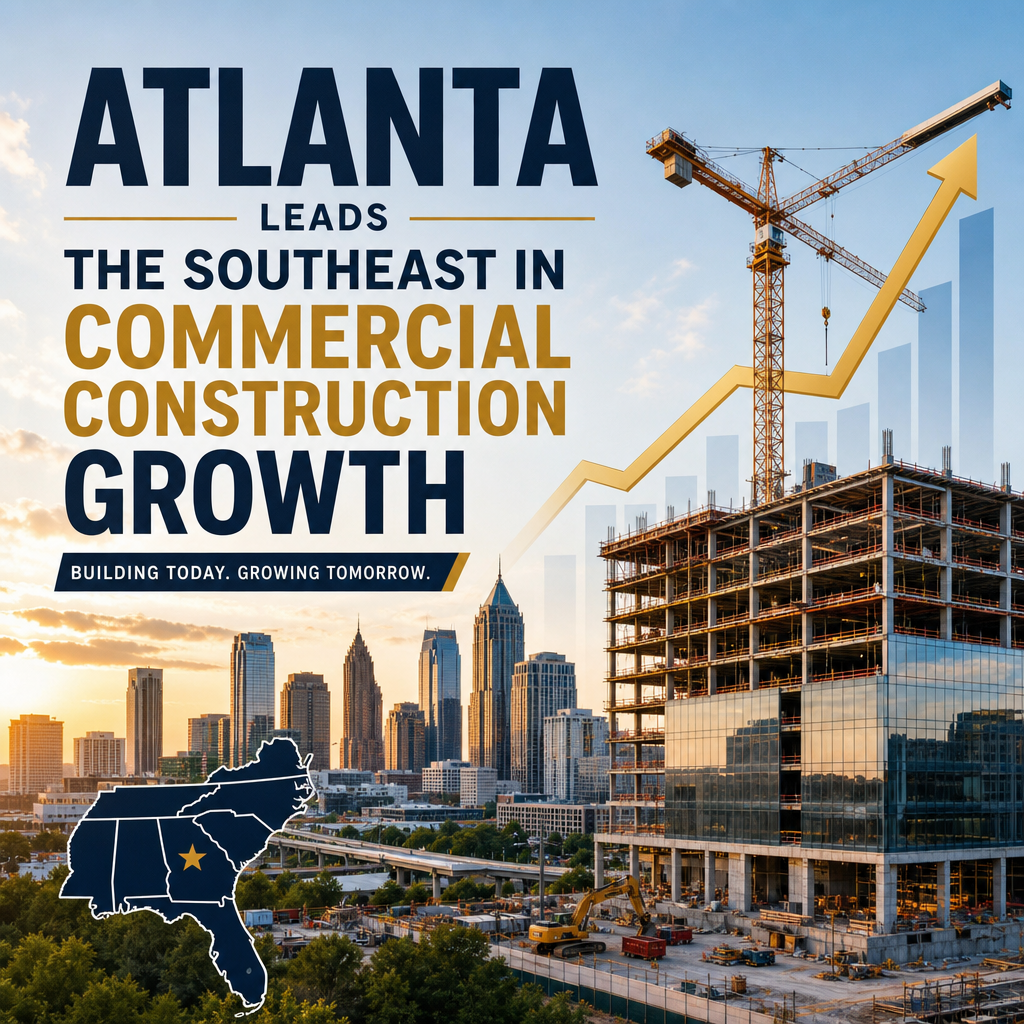
Atlanta Leads the Southeast in Commercial Construction Growth
Why Atlanta Is Leading the Southeast in Commercial Construction Growth
Atlanta has become one of the most active commercial construction markets in the Southeast, and the momentum shows no signs of slowing down. From major mixed-use developments to expanding logistics hubs and new office projects, the city continues to attract developers, investors, and businesses looking for growth.
Several factors are driving this surge. Atlanta’s strategic location, business-friendly environment, population growth, and strong infrastructure make it a natural hub for commercial expansion. In many ways, the city has become a benchmark for construction growth across the region.
A Strategic Location That Supports Business Expansion
Atlanta’s geography plays a major role in its commercial construction success. The city sits at the center of the Southeast, making it an ideal location for distribution, logistics, and corporate operations.
Businesses benefit from:
- Access to major interstate highways
- Hartsfield-Jackson Atlanta International Airport, one of the busiest airports in the world
- Rail and freight connections that support regional and national commerce
- Easy reach to fast-growing markets across the Southeast
This connectivity makes Atlanta especially attractive for companies that need efficient movement of goods, employees, and clients. As a result, demand continues to grow for warehouses, industrial facilities, office space, and supporting retail developments.
Population Growth Is Driving Development
Atlanta’s metro area continues to grow at a steady pace. More people moving into the region means more demand for housing, retail, healthcare, education, and service-based businesses. That growth naturally fuels the need for new construction.
Developers are responding with projects that serve both residents and employers. Some of the most active segments include:
Mixed-Use Developments
Mixed-use projects remain popular because they combine residential, retail, dining, and office space in one location. These developments create walkable communities and help meet the needs of a growing urban population.
Healthcare and Medical Facilities
As the population expands, so does the need for hospitals, outpatient centers, and specialty care facilities. Healthcare construction has become a key part of Atlanta’s commercial development landscape.
Retail and Entertainment Spaces
Retail construction is also evolving. Instead of traditional malls, many new projects focus on lifestyle centers, restaurants, and entertainment districts that offer an experience-driven destination.
Corporate Relocation and Expansion Continue to Fuel Demand
Atlanta has long attracted major companies, and that trend continues. Businesses are drawn to the city’s lower operating costs compared to some other major metros, along with its skilled workforce and competitive tax environment.
Many corporations have relocated headquarters, expanded regional offices, or invested in new campuses in and around Atlanta. This has created ongoing demand for:
- Modern office buildings
- Flexible coworking spaces
- Build-to-suit corporate campuses
- Tech-enabled work environments
Even as workplace trends shift, businesses still need high-quality commercial spaces that support collaboration, hybrid schedules, and operational efficiency. Atlanta’s construction market has adapted quickly to meet those needs.
Industrial and Logistics Construction Is Booming
One of the biggest drivers of commercial construction growth in Atlanta is the industrial sector. E-commerce, supply chain modernization, and regional distribution have all increased the need for warehouses and logistics facilities.
Atlanta’s location gives companies a major advantage when serving customers across the Southeast. This has led to strong demand for:
- Distribution centers
- Fulfillment warehouses
- Manufacturing facilities
- Last-mile delivery hubs
Industrial construction has become one of the most resilient parts of the market. While other segments may fluctuate with economic cycles, logistics-related projects continue to move forward because they are essential to regional commerce.
Infrastructure Investment Supports Long-Term Growth
Commercial construction does not happen in isolation. It relies on roads, utilities, transportation networks, and public improvements. Atlanta has benefited from continued infrastructure investment that supports both private development and long-term regional growth.
Upgrades to transit, road systems, and utility capacity help make new commercial projects feasible. They also improve access to developing corridors, which encourages further investment in underused areas.
This creates a positive cycle:
- Infrastructure improvements open new development opportunities
- Developers build commercial projects in those areas
- New businesses bring jobs and activity
- Additional investment follows
That cycle has helped Atlanta remain one of the most dynamic construction markets in the Southeast.
A Skilled Workforce and Strong Construction Ecosystem
Another reason Atlanta leads the region is its access to talent. The city has a large, diverse workforce that supports architecture, engineering, project management, and skilled trades. Local universities and technical programs also help feed the pipeline of future professionals.
In addition, Atlanta has a strong network of contractors, suppliers, and service providers who understand the pace and complexity of large-scale commercial work. That ecosystem makes it easier to deliver projects efficiently and keep up with rising demand.
Why Atlanta’s Growth Stands Out
Many cities in the Southeast are seeing commercial development, but Atlanta stands out because it combines several advantages at once:
- A central regional location
- Strong population growth
- Major transportation infrastructure
- Corporate relocation activity
- Expanding industrial demand
- Continued public and private investment
These forces work together to create a market with both depth and momentum. While some construction markets depend on one major sector, Atlanta benefits from multiple drivers at the same time.
Looking Ahead
The future of Atlanta commercial construction looks strong. As more companies expand into the region and more people continue moving to the metro area, demand for new commercial space is likely to stay high.
Developers and contractors who understand the market’s unique mix of logistics, mixed-use, office, and industrial growth will be best positioned to succeed. For investors and businesses, Atlanta remains one of the most compelling places in the Southeast to build, expand, and grow.
In a region where competition for development opportunities is increasing, Atlanta continues to lead by combining scale, accessibility, and long-term economic strength. That is why the city remains at the forefront of commercial construction growth in the Southeast.