
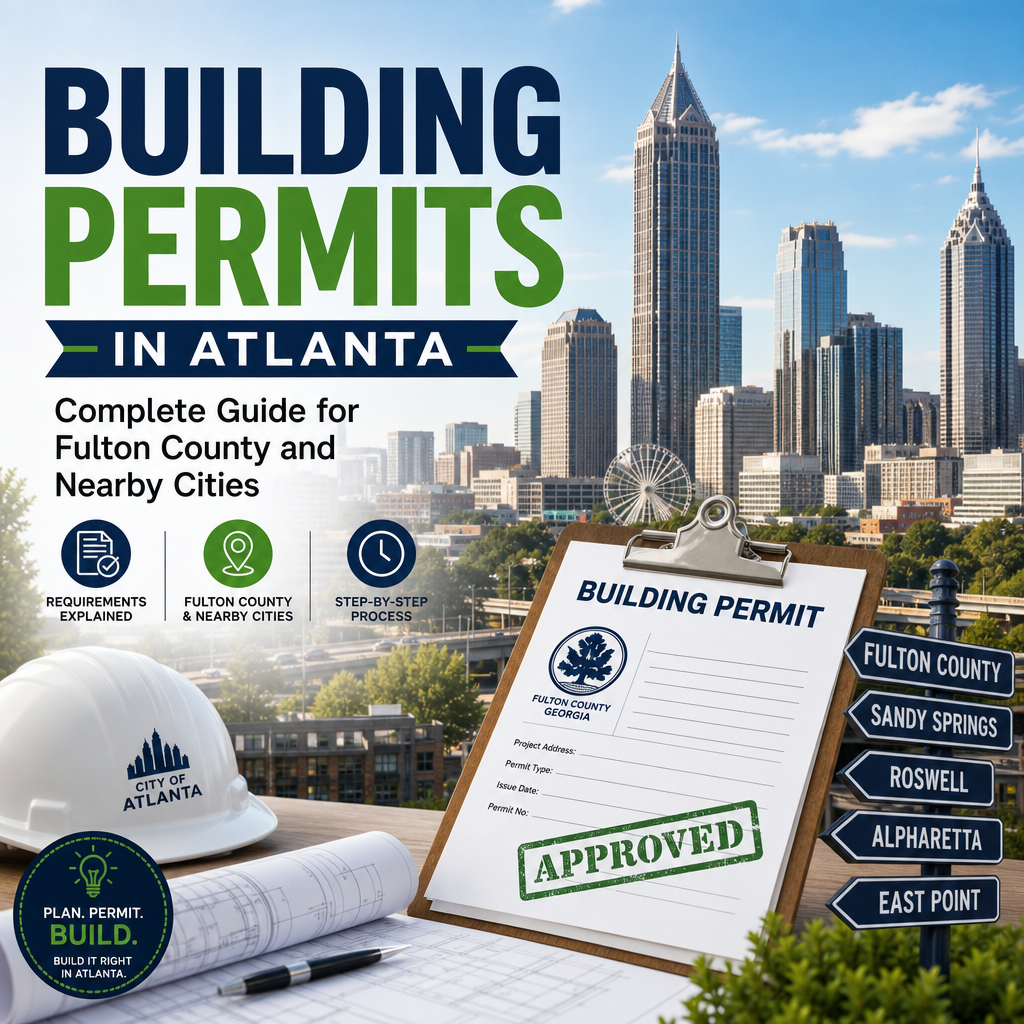
Building Permits in Atlanta: Complete Guide for Fulton County and Nearby Cities
A Complete Guide to Building Permits in Atlanta, Fulton County, and Surrounding Cities
If you are planning a renovation, addition, or new construction project in metro Atlanta, understanding building permits in Atlanta, Fulton County, and surrounding cities is one of the first steps to getting work done legally and smoothly. Permit requirements can vary depending on the type of project and the city or county where the property is located, but the goal is always the same: to make sure construction meets local codes, zoning rules, and safety standards.
Whether you are a homeowner, investor, or contractor, this guide will help you understand when permits are needed, how the process works, and what to expect in Atlanta and nearby communities.
Why Building Permits Matter
A building permit is an official approval from a local government agency that allows you to complete certain types of construction or remodeling work. It is more than a formality. Permits help ensure that projects are safe, properly inspected, and compliant with building codes.
Without the proper permit, you may face:
- Stop-work orders
- Fines or penalties
- Delays in your project
- Problems when selling the property
- Difficulty getting insurance claims approved
In many cases, skipping permits can cost more in the long run than doing things correctly from the start.
When Do You Need a Permit?
Not every project requires a permit, but many common improvements do. In Atlanta, Fulton County, and surrounding cities, permits are typically required for:
- New homes and additions
- Structural changes
- Electrical work
- Plumbing changes
- HVAC installation or replacement
- Decks, porches, and patios in some cases
- Roof replacements, depending on scope
- Demolition
- Major renovations involving walls, framing, or foundations
Smaller cosmetic updates, such as painting, flooring, or cabinet replacement, usually do not require a permit if no structural or mechanical systems are affected.
Projects That Often Surprise Homeowners
Some projects that seem simple may still require approval. For example:
- Removing a load-bearing wall
- Finishing a basement
- Building a garage
- Installing a pool
- Changing the use of a building space
When in doubt, it is always best to check before starting work.
Atlanta vs. Fulton County vs. Nearby Cities
Permit rules can differ depending on location. A property inside Atlanta city limits may follow a different process than one in unincorporated Fulton County or in nearby cities such as Sandy Springs, Johns Creek, Roswell, Alpharetta, or East Point.
Atlanta
The City of Atlanta has its own permitting department and inspection requirements. Projects often require online applications, plan review, and scheduled inspections throughout the build. Larger projects may involve zoning checks, historic district review, or additional documentation.
Fulton County
Properties in unincorporated Fulton County generally follow county permitting procedures. The county may require permits for many of the same construction activities, but application forms, review times, and inspection processes may differ from city systems.
Surrounding Cities
Nearby municipalities may have their own building departments and unique codes, fees, and review rules. Even neighboring cities can have different permit timelines and submittal requirements, so it is important to verify the correct jurisdiction before applying.
The Basic Permit Process
Although the exact steps vary, most permit applications follow a similar pattern.
1. Confirm Jurisdiction
First, determine whether your property is in Atlanta, Fulton County, or another city. This affects where you apply and what rules apply to your project.
2. Prepare Plans and Documents
Many projects require drawings, site plans, contractor information, and project details. More complex jobs may need architectural or engineering plans.
3. Submit the Application
Applications are usually submitted online or in person. Fees depend on the project type, valuation, and scope of work.
4. Plan Review
The local building department reviews your documents to make sure the project meets code and zoning requirements. They may request corrections or additional information.
5. Receive the Permit
Once approved, you can begin work. The permit should be posted at the job site if required.
6. Schedule Inspections
During construction, inspections are typically required at key stages such as foundation, framing, electrical, plumbing, and final completion.
Common Reasons Permits Get Delayed
Even simple projects can get held up if the paperwork is incomplete. Common issues include:
- Incorrect property information
- Missing signatures
- Incomplete drawings
- Wrong permit type
- Zoning issues
- Unlicensed contractor information
- Unpaid fees
Careful preparation can save time and prevent unnecessary back-and-forth with the permitting office.
Tips for a Smoother Approval Process
Here are a few practical tips to help your project move forward:
- Check permit requirements before hiring a contractor
- Make sure drawings are clear and complete
- Confirm the property address and jurisdiction
- Keep copies of all documents and approvals
- Schedule inspections promptly
- Do not cover work before required inspections are passed
Working with experienced professionals can also reduce mistakes and speed up approval.
Final Thoughts
Navigating building permits in Atlanta, Fulton County, and surrounding cities does not have to be overwhelming. Once you understand the local rules, the process becomes much more manageable. The key is to verify your jurisdiction, prepare accurate documents, and apply for the correct permit before any work begins.
Taking the time to do it right helps protect your investment, avoid penalties, and keep your project on schedule. Whether you are building new, remodeling an older home, or making a major upgrade, the right permit is an essential part of a successful project.