
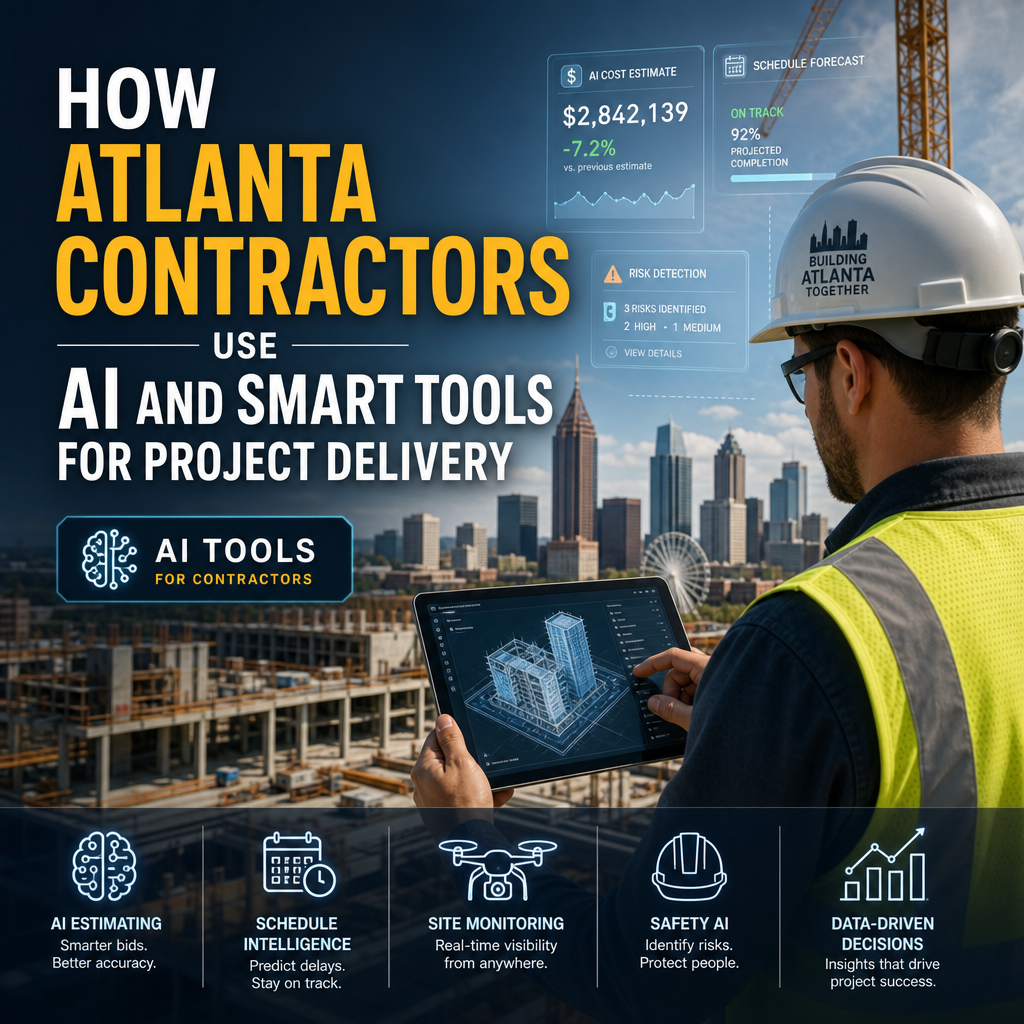
How Atlanta Contractors Use AI and Smart Tools for Project Delivery
How Atlanta Contractors Are Using AI and Smart Tools to Improve Project Delivery
Construction in Atlanta is moving fast, and so are the tools behind it. From growing commercial developments to busy residential builds, contractors are under constant pressure to deliver projects on time, on budget, and with fewer errors. To keep up, many are turning to AI and smart tools that improve planning, communication, safety, and efficiency.
For Atlanta contractors, these technologies are no longer futuristic add-ons. They are becoming practical solutions that help teams work smarter every day.
Why AI Is Gaining Ground in Construction
Construction projects involve many moving parts. Materials arrive on different schedules, crews shift between sites, weather can change plans, and clients expect regular updates. Even small delays can create costly setbacks.
AI helps contractors make sense of this complexity. By analyzing project data quickly, it can identify patterns, predict risks, and recommend better decisions. Instead of relying only on manual tracking or guesswork, teams get clearer visibility into what is happening on site.
Some of the biggest benefits include:
- Better scheduling and forecasting
- Faster document management
- Improved cost control
- Fewer communication gaps
- More accurate risk detection
For busy crews and project managers, that means less time putting out fires and more time keeping work moving forward.
Smarter Project Planning and Scheduling
One of the biggest ways AI is helping contractors is through project planning. Traditional scheduling often depends on static spreadsheets or software that does not adapt well to changing conditions. AI-based tools can look at past project data, labor availability, weather forecasts, and supply timelines to suggest more realistic schedules.
This is especially useful in Atlanta, where weather, traffic, and supply chain delays can impact delivery dates. Smart scheduling tools help contractors adjust plans before problems grow larger.
What this looks like in practice
- Predicting delays before they happen
- Re-sequencing tasks to reduce downtime
- Matching labor and equipment to the right phase of work
- Keeping managers informed when conditions change
This kind of flexibility can make a major difference in keeping a project on track.
AI in Estimating and Cost Control
Accurate estimates are essential in construction. Underestimating labor, materials, or overhead can quickly cut into profit. AI tools help contractors build better estimates by analyzing historical project data and comparing it with current market trends.
Instead of starting from scratch each time, teams can use smarter forecasting tools to improve accuracy. This helps reduce budget surprises and supports stronger bidding strategies.
Contractors are also using AI to monitor spending during the project. When costs begin to rise unexpectedly, smart systems can flag the issue early. That gives project managers time to respond before the budget gets out of hand.
Better Communication Across the Job Site
Construction projects often involve multiple teams, subcontractors, suppliers, and clients. Clear communication is critical, but it is easy for details to get lost in email threads, texts, or handwritten notes.
Smart collaboration tools help centralize communication so everyone is working from the same information. Many of these platforms use AI to organize updates, summarize meeting notes, and route messages to the right people.
Common communication improvements include:
- Centralized project dashboards
- Automatic progress updates
- Digital document sharing
- Faster approval workflows
- Real-time issue tracking
For Atlanta contractors managing several moving parts at once, these tools help reduce confusion and keep teams aligned.
Improving Safety with Smart Technology
Safety is always a top priority in construction. AI and connected devices are giving contractors new ways to monitor conditions and prevent accidents.
Wearable sensors, cameras, and site-monitoring systems can detect hazards, track movement, and alert supervisors to unsafe behavior. Some tools can even analyze patterns that may lead to incidents, such as repeated near-misses or equipment misuse.
These tools do not replace safety training or supervision, but they do add another layer of protection. When used well, they help contractors respond faster and make safer decisions.
Examples of smart safety tools
- Wearables that monitor worker movement
- Cameras with AI-powered hazard detection
- Sensors that track equipment or site conditions
- Mobile apps for reporting incidents instantly
On active job sites, that kind of real-time awareness can save time, money, and possibly lives.
Field Productivity Through Mobile and Connected Tools
Many contractors are also using mobile apps and connected devices to improve field productivity. Instead of waiting until the end of the day to update records, crews can log progress, upload photos, and report issues in real time.
This creates a more accurate picture of how work is moving along. It also helps office staff and project managers make quicker decisions.
Smart tools can support:
- Daily reporting
- Punch list management
- Photo documentation
- Equipment tracking
- Change order approvals
When field and office teams are connected through one system, projects become easier to manage from start to finish.
The Future of Project Delivery in Atlanta
The construction industry in Atlanta is expected to stay competitive, and contractors who embrace AI and smart tools are likely to have an edge. These technologies help reduce waste, improve coordination, and support better outcomes for clients.
That does not mean every contractor needs a complex system all at once. Many start small, using one tool to solve one problem, then expanding as the team gets comfortable. The key is choosing technology that fits the way the business already works.
For contractors who want to deliver projects more efficiently, AI is becoming less of an option and more of a practical advantage.
Conclusion
Project delivery is changing, and Atlanta contractors are adapting with it. By using AI and smart tools, they are improving planning, reducing delays, strengthening communication, and creating safer jobsites. In a market where speed and accuracy matter more than ever, these tools are helping construction teams work with greater confidence and control.