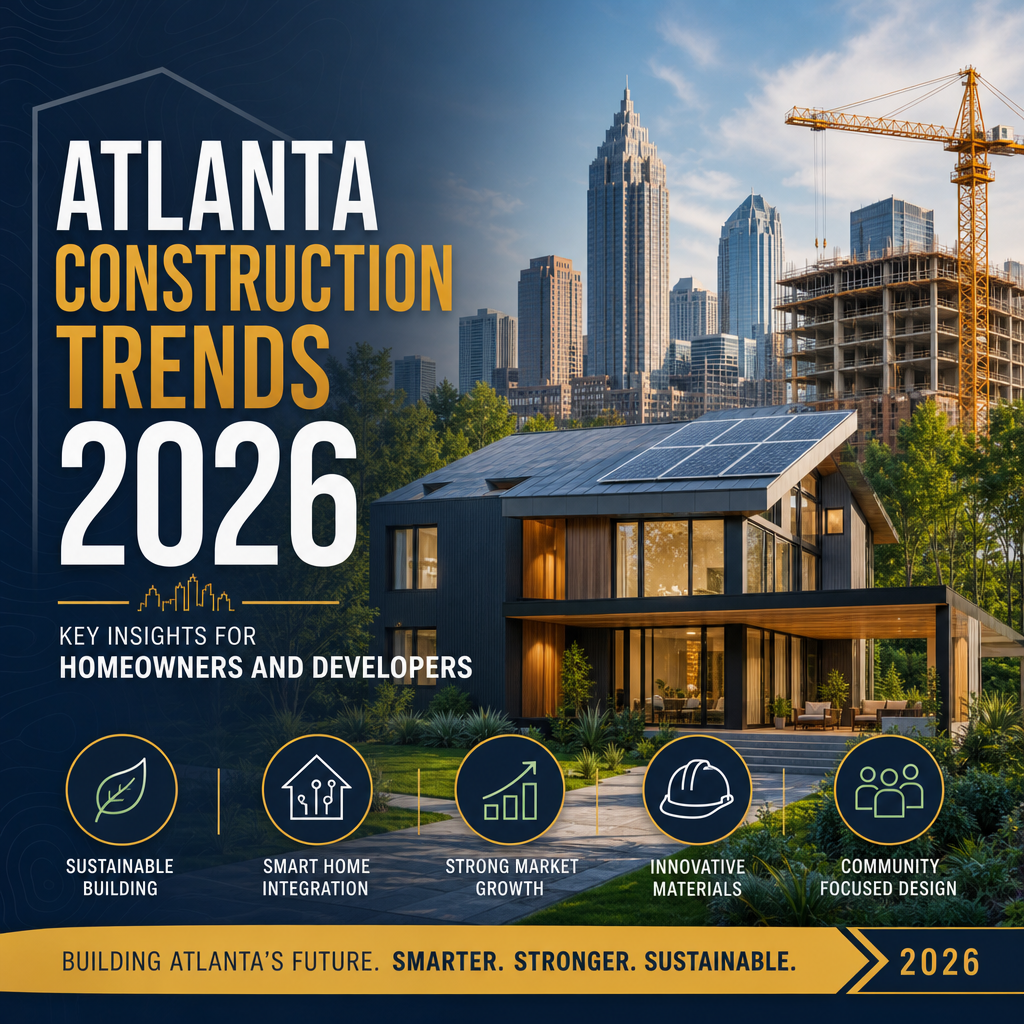
Atlanta Construction Trends 2026: Key Insights for Homeowners and Developers
Atlanta Construction Trends 2026: What Homeowners and Developers Need to Know
Atlanta’s construction market is entering 2026 with a mix of opportunity, caution, and innovation. Growth across the metro area continues to shape demand for new homes, mixed-use developments, renovations, and infrastructure upgrades. At the same time, rising material costs, labor shortages, sustainability goals, and changing homeowner expectations are pushing builders to adapt.
For anyone planning a project, understanding Atlanta construction trends 2026 is essential. Whether you are a homeowner considering a remodel or a developer evaluating a new build, the direction of the market can affect budgets, timelines, and long-term value.
1. Smart, Energy-Efficient Building Is Becoming Standard
Energy efficiency is no longer a luxury feature. In 2026, it is quickly becoming a baseline expectation in Atlanta construction. Homeowners want lower utility bills, better indoor comfort, and homes that are built to withstand Atlanta’s hot summers and unpredictable weather.
Developers are responding with:
- High-performance insulation and windows
- Smart thermostats and connected HVAC systems
- Energy-efficient appliances and lighting
- Solar-ready roofing and battery storage options
- Improved air sealing and ventilation systems
These upgrades are not only attractive to buyers but can also help properties stay competitive in a crowded market.
Why it matters
Energy-efficient buildings often cost more upfront, but they can reduce operating expenses over time. In a market like Atlanta, where buyers are increasingly aware of monthly costs, this can influence both resale value and leasing potential.
2. Infill Development Remains Strong
Atlanta continues to expand inward as much as outward. Infill development, or building on vacant or underused land within established neighborhoods, is expected to stay strong in 2026. This trend is especially visible in areas close to transit, job centers, and walkable retail corridors.
For developers, infill projects offer access to high-demand locations. For homeowners, the trend can mean more renovation activity, teardown rebuilds, and neighborhood revitalization.
Common infill opportunities include:
- Townhomes and small multifamily buildings
- Mixed-use projects near transit lines
- Lot subdivisions in older neighborhoods
- Adaptive reuse of commercial buildings
Because infill sites often come with zoning challenges, utility constraints, and community review, careful planning is more important than ever.
3. Modular and Prefabricated Construction Is Gaining Ground
Speed and efficiency are becoming major priorities in the Atlanta market. Modular and prefabricated construction methods are helping reduce delays, improve quality control, and lower labor pressure.
In 2026, more builders are expected to use off-site fabrication for:
- Wall panels
- Bathroom pods
- Structural components
- Whole-home modular units
This approach can shorten project timelines and reduce waste. It is especially useful for multifamily housing, accessory dwelling units, and repetitive development formats.
For homeowners and developers
If you are planning a project, modular construction may be worth exploring if speed and cost predictability matter. It is not a fit for every site, but it is becoming a serious option in Atlanta’s evolving market.
4. Renovation Demand Is Still High
New construction gets attention, but renovation remains a major force in Atlanta. Many homeowners are choosing to improve rather than move, especially in established neighborhoods where location is hard to replace.
Popular renovation projects in 2026 include:
- Kitchen and bathroom upgrades
- Basement finishing
- Home office additions
- Outdoor living spaces
- Whole-home energy retrofits
Developers are also seeing opportunities in large-scale rehab and repositioning projects. Older homes and underperforming properties can offer strong returns when updated strategically.
What drives the trend
Higher interest rates and limited inventory have encouraged many buyers to stay put and invest in their current homes. As a result, renovation contractors and design-build firms remain busy across the metro area.
5. Sustainable Materials Are Moving Into the Mainstream
Sustainability is no longer just a marketing term. In 2026, Atlanta construction projects are increasingly using materials that reduce environmental impact and support long-term durability.
Examples include:
- Recycled and reclaimed building materials
- Low-VOC paints and finishes
- Engineered wood products
- Cool roofing systems
- Durable siding and decking alternatives
Builders are also paying more attention to stormwater management, heat reduction, and landscape design. These choices matter in a city where weather resilience and long-term maintenance costs are top concerns.
6. Technology Is Improving Project Management
Construction technology is changing how projects are planned and delivered. In Atlanta, contractors and developers are using digital tools to improve estimating, scheduling, communication, and quality control.
Common tools include:
- Building information modeling (BIM)
- Drone site surveys
- Project management software
- Remote progress tracking
- Digital permitting and plan review systems
These technologies help reduce errors and keep clients informed. They can also improve coordination between architects, engineers, contractors, and subcontractors.
The practical benefit
For homeowners, this may mean fewer surprises during construction. For developers, it can mean faster decisions and better control over risk.
7. Labor and Cost Pressures Are Still a Reality
Even with strong demand, the Atlanta market is not without challenges. Skilled labor remains tight, and pricing for materials and subcontractors continues to fluctuate. These pressures are likely to remain part of the conversation in 2026.
That means project planning needs to be realistic. Contingency budgets, flexible schedules, and early contractor engagement are more important than ever.
Best practices for staying on track
- Lock in designs early
- Get multiple bids when possible
- Build contingency into the budget
- Order long-lead materials ahead of time
- Work with teams familiar with local permitting and zoning
Conclusion
The Atlanta construction trends 2026 point toward a market shaped by efficiency, flexibility, and long-term value. Energy-smart homes, infill development, modular methods, and sustainable materials are all becoming more important. At the same time, renovation and adaptive reuse continue to offer strong opportunities for homeowners and developers alike.
Success in this market will depend on planning carefully, choosing the right construction approach, and staying ahead of shifting costs and expectations. For anyone building or improving property in Atlanta, 2026 is a year to think strategically and build with the future in mind.