Top Construction Projects Transforming Midtown, Downtown, and Westside Atlanta
Top Construction Projects Transforming Midtown, Downtown, and Westside Atlanta
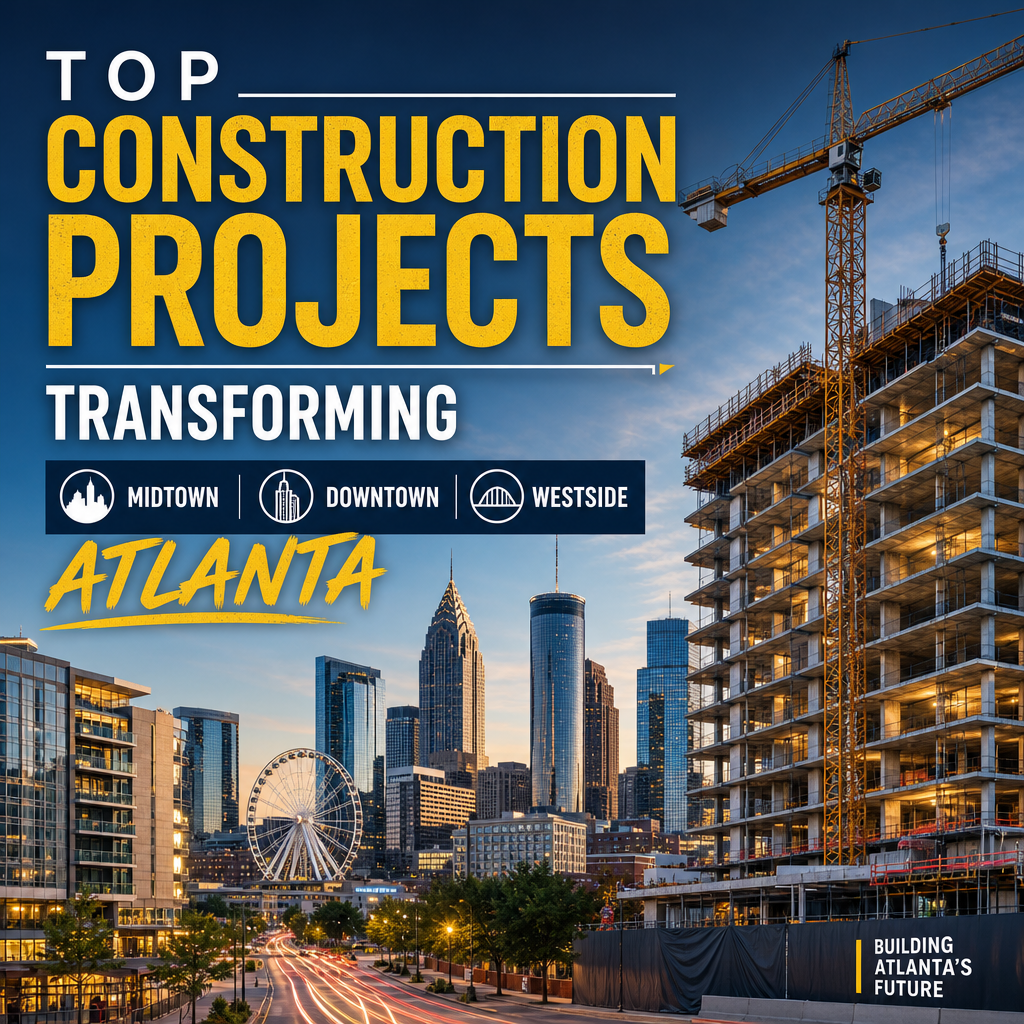
Atlanta’s skyline is changing fast, and nowhere is that more visible than in Midtown, Downtown, and Westside Atlanta. These neighborhoods are seeing a wave of new towers, mixed-use developments, infrastructure upgrades, and public space improvements that are reshaping how people live, work, and move around the city.
From high-rise office projects to neighborhood-focused redevelopment, the top construction projects transforming Midtown, Downtown, and Westside Atlanta are creating new energy in some of the city’s most important districts. Here’s a closer look at what’s underway and why it matters.
Midtown Atlanta: Density, Design, and Walkability
Midtown has long been one of Atlanta’s most active development zones, and construction there continues to push the area toward a more urban, connected future.
New residential and mixed-use towers
Midtown is seeing continued demand for high-density living. New apartment towers and mixed-use buildings are bringing more residents into the core of the neighborhood, often with ground-floor retail, coworking space, and amenities designed for walkable living.
These projects are helping Midtown become even more of a live-work-play district. As more people move into the area, local restaurants, shops, and entertainment venues benefit from a larger customer base.
Office and innovation spaces
Commercial construction is also shaping Midtown’s future. Modern office developments are being designed with flexible layouts, sustainable systems, and improved access to transit. Many of these buildings are targeting companies that want a central location with strong amenities and a more collaborative environment.
In addition, some projects are focused on innovation and education, supporting startups, research, and creative industries. That mix of uses helps keep Midtown competitive as business needs continue to evolve.
Public realm improvements
Beyond private development, Midtown is investing in the streets and public spaces that make the neighborhood more livable. Sidewalk upgrades, better bike access, and improved pedestrian crossings are all part of a broader effort to support growth without losing connectivity.
Downtown Atlanta: Reinvestment in the Urban Core
Downtown Atlanta is undergoing a major transformation of its own. Long known as the city’s civic and business center, the area is seeing new construction that aims to bring more people, more activity, and more reasons to stay after business hours.
Hotel, residential, and entertainment projects
One of the biggest trends in Downtown is the shift toward mixed-use redevelopment. New hotels, apartments, and entertainment spaces are helping create a more vibrant environment for residents, visitors, and workers.
This type of development is especially important in Downtown, where many buildings were traditionally designed for office use only. Adding more housing and hospitality options creates a stronger 24-hour district rather than a neighborhood that empties out at night.
Transit-oriented development
Downtown’s location and transit access make it a prime candidate for construction tied to mobility. Projects near rail stations, bus corridors, and major pedestrian routes are helping improve the connection between neighborhoods and regional destinations.
Transit-oriented development can reduce traffic pressure while making the area more accessible. It also supports a more sustainable model for future growth.
Historic reuse and adaptive redevelopment
Some of the most interesting construction in Downtown involves the adaptive reuse of older buildings. Developers are restoring and repurposing historic structures for modern use, preserving character while adding value.
This approach keeps Downtown’s identity intact while meeting current market demand. It also shows how construction can honor the past while preparing for the future.
Westside Atlanta: A New Chapter of Growth
Westside Atlanta has become one of the city’s most watched development corridors. Once overlooked by many investors, the area is now attracting major projects that are bringing housing, retail, green space, and community amenities.
Mixed-use neighborhoods and new housing
Westside construction is centered heavily around mixed-use communities. These projects often combine apartments, townhomes, retail, and public gathering areas in a single development footprint.
The goal is not just to build more housing, but to create neighborhood destinations. That means safer streets, more local services, and spaces where people can spend time without needing to travel far.
Industrial and logistical development
Westside is also benefiting from industrial construction and logistics-focused projects. Its access to major roadways and regional distribution routes makes it attractive for warehouses, service centers, and support facilities.
While these projects may not always get the same attention as skyline developments, they play a major role in Atlanta’s economy. They support jobs, supply chains, and business operations across the region.
Parks, trails, and community infrastructure
Another key part of Westside’s transformation is investment in parks, trails, and public infrastructure. Greenway connections and pedestrian-friendly enhancements are helping link neighborhoods together and improve quality of life.
These upgrades matter because they ensure growth is not just about buildings. It’s also about accessibility, safety, and long-term neighborhood stability.
Why These Projects Matter
The top construction projects transforming Midtown, Downtown, and Westside Atlanta are doing more than changing the skyline. They are influencing how Atlanta functions as a city.
Key impacts include:
- More housing options in central neighborhoods
- Stronger commercial and retail activity
- Improved walkability and transit access
- Better public spaces and neighborhood connections
- Long-term economic growth across multiple districts
Together, these developments are helping Atlanta grow in a more balanced and connected way. Midtown is deepening its urban appeal, Downtown is reclaiming momentum as a true mixed-use core, and Westside is emerging as a major center of opportunity.
Looking Ahead
Atlanta’s construction boom shows no sign of slowing down. As these neighborhoods continue to evolve, the focus will likely remain on projects that blend density, mobility, and community value.
For residents, businesses, and investors, that means plenty more change ahead. And for the city as a whole, it means a future shaped by thoughtful development in some of Atlanta’s most important neighborhoods.