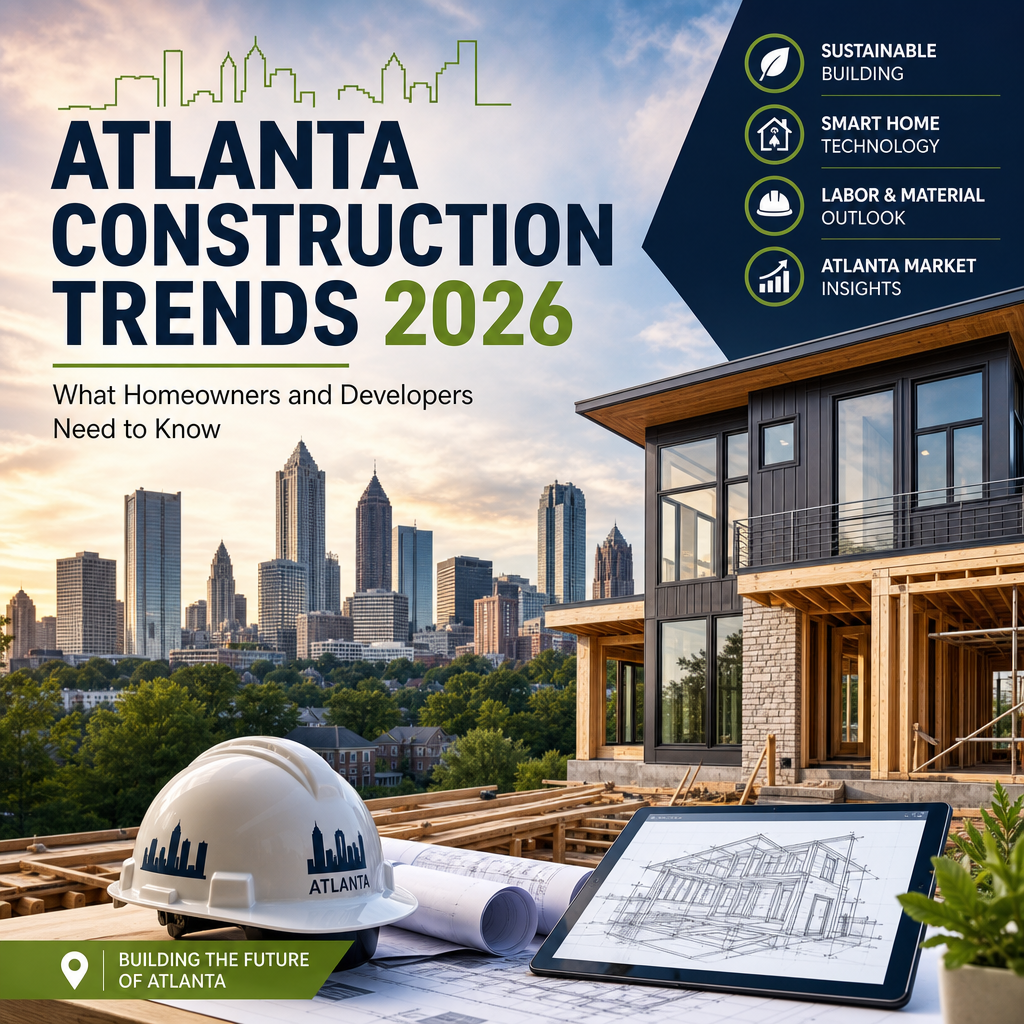
Atlanta Construction Trends 2026: What Homeowners and Developers Need to Know
Atlanta Construction Trends 2026: What Homeowners and Developers Need to Know
Atlanta’s building landscape is changing fast. As the city continues to grow, so do expectations around design, sustainability, technology, and cost efficiency. Whether you are planning a custom home, a renovation, or a large-scale development, understanding Atlanta Construction Trends 2026 can help you make smarter decisions and avoid costly mistakes.
In 2026, construction in Atlanta is being shaped by population growth, weather resilience, labor pressures, and a stronger demand for modern, flexible spaces. Here’s what homeowners and developers should keep on their radar.
1. Sustainable Building Is Becoming the Standard
Sustainability is no longer a niche feature. In Atlanta, it is quickly becoming an expectation. More homeowners want energy-efficient homes that lower utility bills, while developers are responding to stricter standards and buyer demand.
What this means in practice
- Better insulation and airtight construction
- High-efficiency HVAC systems
- Solar-ready roofing and electrical design
- Water-saving fixtures and smart irrigation
- Low-VOC paints and healthier interior materials
For developers, sustainable features are now a selling point, not just an added bonus. For homeowners, they can increase comfort and reduce long-term operating costs. In many cases, green upgrades also improve resale value.
2. Smart Home Integration Is Moving Beyond Luxury
Smart home technology is becoming mainstream across Atlanta construction projects. In 2026, buyers expect more than just a smart thermostat. They want homes that feel connected, secure, and easy to manage.
Popular smart features include
- App-controlled lighting and climate systems
- Smart locks and video doorbells
- Leak detection and water shutoff systems
- Whole-home security integration
- Voice-activated controls and automation scenes
For custom home projects, integrating smart systems during construction is more efficient than retrofitting later. Developers are also using smart features as a way to stand out in competitive neighborhoods.
3. Flexible Floor Plans Are in Demand
Lifestyle changes have reshaped the way people use their homes. Remote work, multigenerational living, and the need for adaptable spaces are influencing design choices across the city.
Homeowners are looking for:
- Dedicated home offices
- Bonus rooms that can shift between uses
- Guest suites with privacy
- Open living areas that still offer zoning
- Outdoor spaces that extend usable square footage
In Atlanta Construction Trends 2026, flexibility is one of the biggest priorities. Buyers no longer want rigid layouts that only serve one purpose. They want spaces that can evolve with their needs over time.
4. Resilience and Weather Preparedness Matter More
Atlanta’s climate brings heat, heavy rain, storms, and occasional flooding concerns. As a result, more projects are focusing on durability and resilience from the start.
Important resilience features
- Improved drainage and grading
- Moisture-resistant building materials
- Impact-rated windows and reinforced roofing
- Raised mechanical systems in flood-prone areas
- Shade structures and reflective exterior finishes
Developers are increasingly factoring weather risks into site planning and materials selection. Homeowners, especially those building custom homes, are also more aware of long-term maintenance and risk reduction.
5. Infill Development Continues to Shape the City
With limited land in desirable areas, Atlanta is seeing more infill construction. This includes new homes, townhomes, and mixed-use projects built on underused or previously developed lots.
Why this trend matters
- It supports growth without pushing outward too far
- It helps revitalize established neighborhoods
- It creates opportunities for higher-density living
- It often requires creative design and zoning knowledge
For developers, infill projects can be profitable but complex. Lot size, neighborhood context, permitting, and utility access all affect feasibility. For homeowners, infill can mean more options in communities that were once difficult to enter.
6. Labor and Material Efficiency Are Top Priorities
Construction costs remain a major concern in 2026. Fluctuating material prices, permit delays, and labor shortages continue to affect schedules and budgets. That means efficiency is more important than ever.
Builders are responding by:
- Using prefabricated components where possible
- Standardizing certain finishes and details
- Improving project planning and digital coordination
- Sourcing materials closer to home when possible
- Reducing waste through better estimating and ordering
For homeowners, this means early planning is essential. Changes made late in the process can be expensive. For developers, strong preconstruction strategy is one of the best ways to protect margins.
7. Design Is Getting More Local and More Livable
Atlanta buyers are showing a growing preference for homes and buildings that feel rooted in the region. That includes design choices that respond to the local climate, lifestyle, and architectural character of the city.
Common design themes in 2026
- Warm, natural materials
- Covered porches and outdoor living areas
- Larger windows with energy-efficient glazing
- Transitional styles that blend modern and traditional elements
- Interiors that emphasize light, openness, and function
People want homes that look current but still feel comfortable and timeless. This is especially true in neighborhoods where design needs to fit the surrounding context.
What Homeowners and Developers Should Do Next
If you are planning a project in Atlanta, the best approach is to think long-term. Build for efficiency, comfort, and adaptability rather than chasing short-lived trends.
Practical next steps
- Review energy codes and local zoning early
- Budget for smart systems and resilience upgrades
- Prioritize flexible layouts and durable materials
- Work with professionals who know Atlanta’s permitting landscape
- Plan for future maintenance, not just initial construction cost
Final Thoughts
Atlanta Construction Trends 2026 point to a city that is building smarter, greener, and more adaptable. Homeowners want spaces that support modern living, while developers need projects that balance efficiency, market appeal, and long-term value.
The most successful construction projects in Atlanta will be the ones that combine thoughtful design with practical planning. By focusing on sustainability, technology, flexibility, and resilience, you can create buildings that are ready for today and prepared for tomorrow.