
Residential Construction Costs in Atlanta: 2026 Pricing Breakdown
Residential Construction Costs in Atlanta: Updated 2026 Pricing Breakdown
Residential construction costs in Atlanta continue to rise in 2026, but the market remains more affordable than many other major U.S. metros. Whether you’re planning a custom home, a full teardown rebuild, or a new spec house, understanding the current price range is essential before you start budgeting.
Atlanta’s construction market is shaped by labor demand, material pricing, permitting timelines, and neighborhood-specific land values. In this guide, we break down the main cost drivers and what homeowners can expect to pay this year.
Average Residential Construction Costs in Atlanta
For 2026, Residential Construction Costs in Atlanta typically fall into the following ranges:
- Basic build: $170–$230 per square foot
- Mid-range custom home: $230–$320 per square foot
- High-end custom home: $320–$500+ per square foot
These numbers usually cover general construction, finishes, and standard labor. They may not include land, major site prep, or expensive design upgrades.
For a 2,500-square-foot home, that means:
- Basic: about $425,000–$575,000
- Mid-range: about $575,000–$800,000
- High-end: about $800,000–$1.25 million+
What Influences Construction Costs in Atlanta?
Several factors push costs up or down. In Atlanta, the biggest ones are location, home size, and finish level.
1. Neighborhood and lot conditions
Building in intown Atlanta usually costs more than in some suburban areas because of tighter lots, tougher access, and higher site preparation needs. Sloped lots, tree removal, demolition, and utility upgrades can all add significant expense.
2. Labor availability
Skilled labor remains in high demand in 2026. Framers, electricians, plumbers, and finish carpenters often command higher rates, especially during peak building season. Delays can also increase carrying costs and general contractor overhead.
3. Material pricing
While some material categories have stabilized, prices for lumber, steel, roofing, windows, and cabinetry can still shift quickly. Imported finishes and specialty products may add lead time and cost.
4. Design complexity
Simple layouts are less expensive to build than homes with:
- multiple rooflines
- vaulted ceilings
- custom millwork
- large window packages
- luxury kitchens and baths
Architectural complexity often increases both labor and material costs.
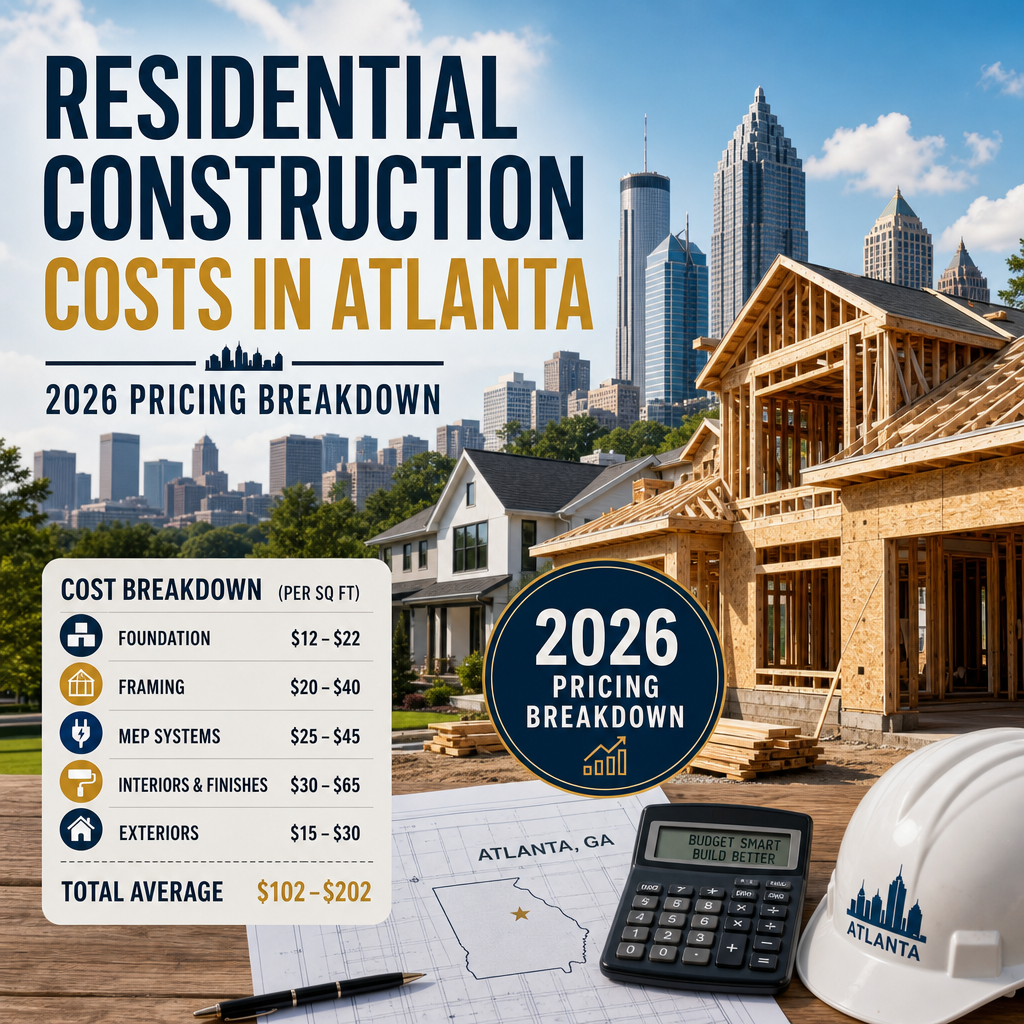
Cost Breakdown by Category
Here’s a general look at where the money goes in a typical new home build.
Site work and preparation
This can range from $15,000 to $80,000+ depending on the lot. Items may include clearing, grading, excavation, utility connections, drainage work, and foundation prep.
Foundation and framing
Expect roughly $40,000 to $140,000+ depending on the size and type of foundation. Framing costs also vary based on home design, number of stories, and structural demands.
Mechanical systems
Heating, cooling, plumbing, and electrical can total $50,000 to $150,000+ for many homes. Energy-efficient systems or smart-home upgrades can push the number higher.
Interior finishes
This is one of the most variable parts of the budget. Flooring, cabinets, countertops, tile, trim, paint, fixtures, and appliances may range from $80,000 to $300,000+ depending on quality and customization.
Exterior and landscaping
Siding, brick, stone accents, decks, porches, driveways, and landscaping often add $30,000 to $120,000+. Homes in more upscale areas may require higher-end exterior materials to match neighborhood standards.
How Atlanta Compares to Other Markets
Atlanta is still relatively competitive compared to cities like New York, Los Angeles, or Miami. However, it is no longer a “low-cost” construction market.
Compared with nearby Southern metros, Atlanta often lands in the middle:
- more expensive than many smaller Georgia cities
- similar to or slightly above some Southeast markets
- lower than major coastal construction hubs
That balance makes the city attractive for buyers who want custom construction without the extreme costs seen in larger coastal markets.
Tips for Staying on Budget in 2026
If you’re planning a build this year, a few smart decisions can make a big difference.
- Choose a realistic floor plan. Simple layouts are cheaper and faster to build.
- Finalize selections early. Late changes often increase labor and material costs.
- Set aside a contingency fund. A reserve of 10% to 15% is a good starting point.
- Compare multiple builders. Pricing and allowances can vary widely.
- Evaluate the lot carefully. Hidden site issues can derail the budget quickly.
Final Thoughts
Residential construction costs in Atlanta for 2026 reflect a market that is still active, competitive, and highly dependent on project scope. While basic builds can still be managed efficiently, custom homes with premium finishes or difficult sites will require a much larger budget.
The best way to plan is to break the project into categories, get detailed estimates early, and leave room for unexpected costs. With the right strategy, building in Atlanta can still be a strong long-term investment.