
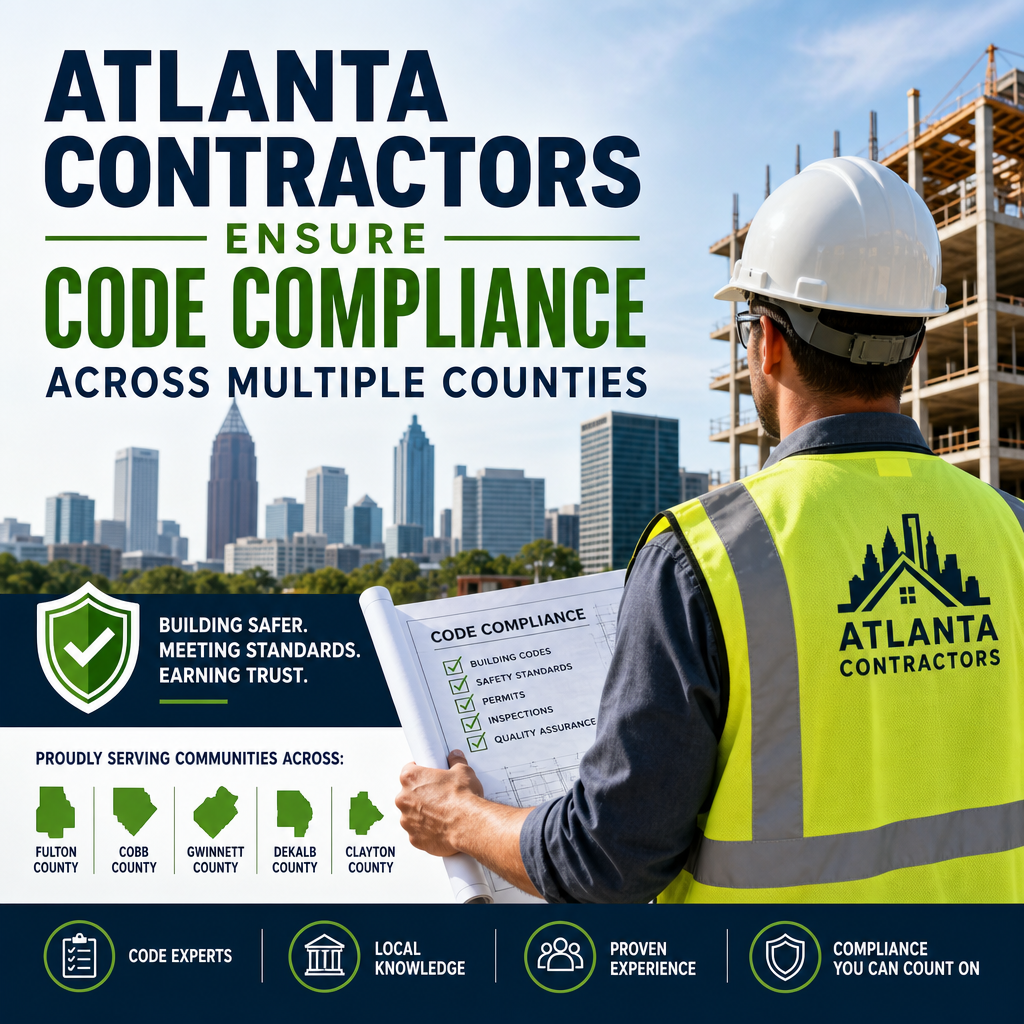
Atlanta Contractors Ensure Code Compliance Across Multiple Counties
How Atlanta Contractors Ensure Code Compliance Across Multiple Counties
Construction in metro Atlanta rarely happens in just one jurisdiction. A single project may touch Atlanta, Fulton County, DeKalb County, Cobb County, Gwinnett County, or other nearby municipalities, each with its own rules, permitting process, and inspection standards. For contractors, this creates a major challenge: staying compliant while keeping projects on schedule.
Understanding how Atlanta contractors ensure code compliance across multiple counties is essential for avoiding delays, failed inspections, and costly rework. The most successful contractors build compliance into every phase of the job, from planning to final sign-off.
Why Code Compliance Is More Complicated in Metro Atlanta
Georgia has statewide building codes, but local governments often adopt amendments, enforce different zoning requirements, and apply unique permitting procedures. That means two neighboring counties may interpret the same project differently.
Some of the most common differences include:
- Permit application requirements
- Plan review timelines
- Setback and zoning rules
- Energy code amendments
- Stormwater and drainage regulations
- Inspection scheduling and documentation standards
A contractor working in multiple counties must account for all of these differences before any work begins.
Starting with Local Research
The best contractors do not assume one county’s rules will apply everywhere. Instead, they research each jurisdiction separately during pre-construction.
What they check first
Before submitting plans, contractors typically review:
- County building department websites
- Municipal code amendments
- Zoning maps and land-use rules
- Permit checklists
- Inspection requirements
- Utility and erosion control standards
This early research helps identify potential issues before they become expensive problems. It also ensures that the design team and subcontractors understand the specific expectations of the jurisdiction.
Working with Experienced Local Professionals
One of the most effective ways Atlanta contractors ensure code compliance across multiple counties is by partnering with professionals who know the local rules.
Key partners include:
- Architects familiar with regional code differences
- Engineers who understand structural and civil requirements
- Local permit expediters
- Surveyors who can verify setbacks and property lines
- Specialized subcontractors with county-specific experience
These experts help interpret code details and prevent avoidable mistakes. In many cases, their local knowledge speeds up approval because they know what reviewers are looking for.
Building Compliance into the Design Phase
Code compliance should never be treated as a final checklist item. In successful projects, it begins during design.
Contractors often coordinate with designers to make sure plans reflect:
- Current building code requirements
- Accessibility standards
- Fire protection rules
- Mechanical, electrical, and plumbing code updates
- Energy efficiency requirements
- Local zoning restrictions
When compliance is part of the design process, the project is less likely to run into issues during plan review or inspection. This approach saves time and reduces revisions.
Staying Organized with County-Specific Documentation
Because each county may require different paperwork, contractors rely on detailed document management systems. Keeping everything organized is especially important when managing multiple jobs across different jurisdictions.
Common documents include:
- Permit applications
- Stamped construction drawings
- Engineering letters
- Site plans
- Environmental or erosion control permits
- Inspection logs
- Correction notices and responses
Contractors who maintain clear records can respond faster to county requests. Good documentation also makes it easier to prove compliance if questions arise later.
Training Crews on Local Requirements
Even with strong planning, field execution matters. A job can still fail inspection if crews are not following the correct standards on site.
That is why contractors train supervisors and subcontractors on the specific requirements for each county. This may include:
- Framing details
- Fire-blocking and draft-stopping rules
- Trench and footing depth
- Moisture barrier installation
- ADA accessibility measurements
- Erosion control placement
- Final finish and safety requirements
When field teams understand what is expected, they can correct issues immediately instead of waiting for an inspector to find them.
Managing Inspections Carefully
Inspection schedules can vary from one county to another, so contractors must stay flexible. Some jurisdictions allow online scheduling, while others require phone requests or same-day coordination.
To stay on track, contractors typically:
- Confirm inspection windows in advance
- Ensure work is fully ready before calling for inspection
- Keep approved plans on site
- Assign a point person to meet inspectors
- Address correction notices quickly
A smooth inspection process depends on preparation. Projects that are organized from the start tend to move through county reviews with fewer delays.
Using Technology to Track Compliance
Many Atlanta contractors now use project management software to stay ahead of compliance issues. Digital tools help them track permits, deadlines, inspection dates, and plan revisions across multiple counties.
Technology can also make it easier to:
- Share updated drawings with crews
- Store permit approvals in one place
- Track change orders that affect code compliance
- Monitor correction items
- Keep communication clear between office and field teams
With multiple jurisdictions involved, digital tracking reduces confusion and helps keep everyone aligned.
The Value of a Compliance-First Approach
Code compliance is not just about avoiding fines. It protects the client’s investment, improves safety, and helps ensure the project can move forward without interruption. Contractors who master compliance also build stronger reputations because they deliver reliable results.
In a region as active and diverse as metro Atlanta, success depends on understanding the rules in every county and planning for them from day one. That is what separates average contractors from those who consistently finish projects smoothly and professionally.
Conclusion
How Atlanta contractors ensure code compliance across multiple counties comes down to preparation, local knowledge, and careful execution. By researching jurisdiction-specific rules, working with experienced professionals, training crews, and managing inspections closely, contractors can navigate complex requirements with confidence.
In a fast-growing market with many overlapping regulations, compliance is not a burden to avoid. It is a key part of delivering quality work that lasts.